HDR Newbie
Posted 4 years ago
Hi, my first post here, I have just got a D40X (a step up from my Compact Camera) in an attempt to up the quality of my snaps, although not a true photographer i do like to take care in what i shoot. I have been scouring the internet looking for tips and tutorials on how to operate the thing LOL and came across this excellent site, I have enjoyed looking at some true fantastic stuff.

One of the things that caught my eye was HDR, although some pictures i have seen look fake and even loose the look of a camera and could be made in a computer alone, i have seen some shots that look fantastic, not fake.

Now for my question, I have seen some tutorials use shutter speed and others use exposure compensation to take the original photos, I chose the later, I took 15 photos from one side of the meter to the other, and used them all =, then i tried just using 5 or 7 like most of the tutorials and didn't get the same results as i would have hoped.

Is this the result i can expect from 15 or should i be getting this result from just five?

See my attempt here

I hope to use this in night shots as i am really interested in this subject, also is there any tutorials online to help me take these sorts of pictures that could help?

regards
Dave
 
Posted 4 years ago
Hey there David,
first of all welcome to the pond =)

To your question about HDR, I think 15 shots is a bit over the top, 5-7 even is a lot, I in most cases will use 3.
So the result you got there is just fine (from a technical aspect). Or what is it that bothers you?
You will certainly be able to use that technique for night shots as well, but don't forget to bring a lot of patience, battery and time with you ;)
Let us know if you have any further questions,
cheers...
 
Posted 4 years ago
Thanks for the reply, I tried using 2, 5, and 7 shots but didnt get anywhere near the depth of this one i posted that used 15, so i was wondering if i was not doing something right?

whats normal values to use on three shots? -3 0 +3 exposure values? or should there be greater gaps?
 
Posted 4 years ago
David, i always do 3 exposures, -2,0 and +2. i think the number of exposures you need for the "best" result varies from scene to scene. how do you merge them to hdr, do you use photoshop?

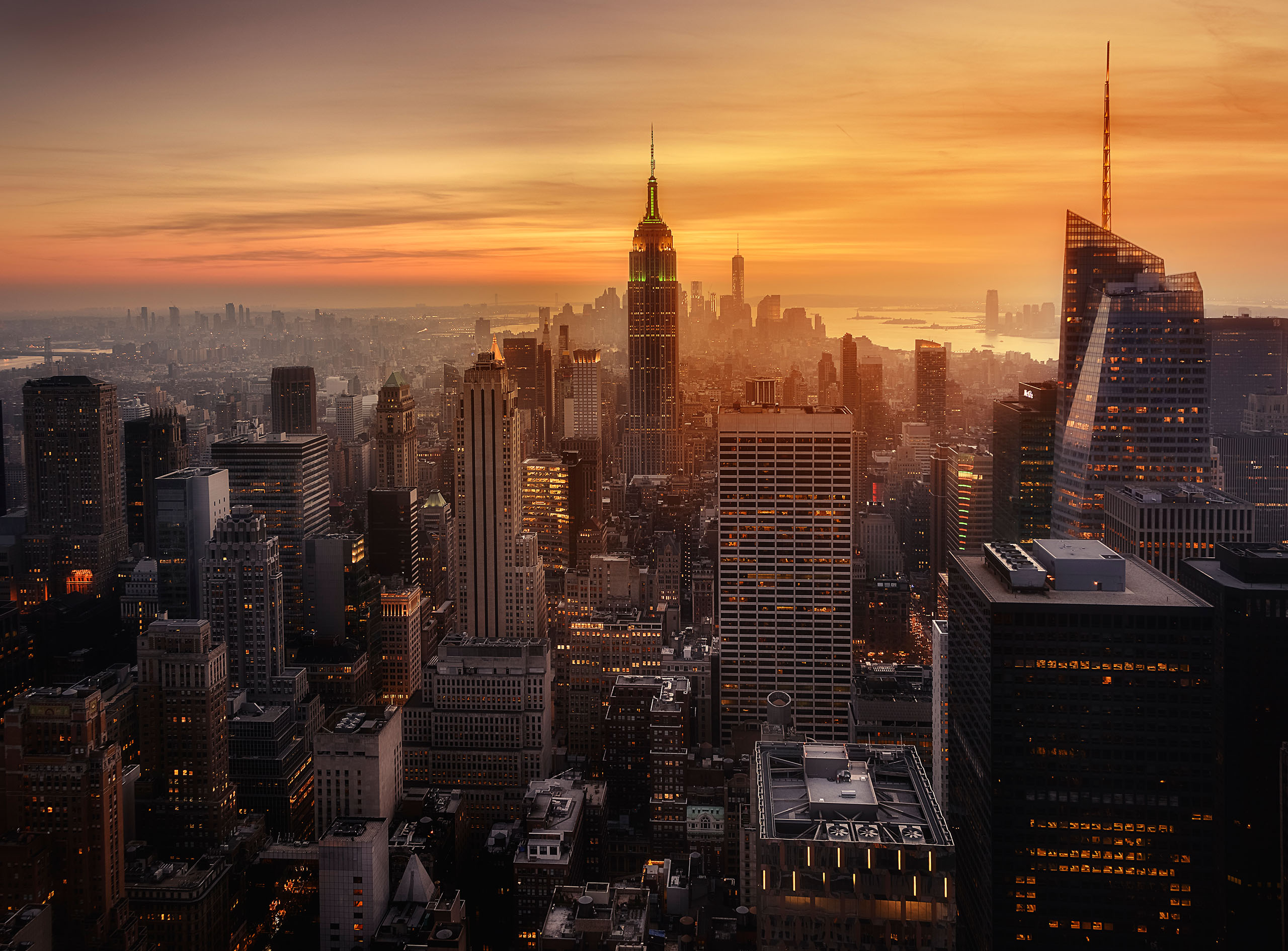
this one is made with 3 exposures:


and this one is made with only one exposure (raw):


your result looks good to me.
 
Posted 4 years ago
Hi David,
most cameras simply use auto-bracketing with -2/0/+2 and it works just fine for 95% of the scenes (but unfortunately, I don't think the D40x does auto-bracketing). Using more than 3 photos will be justified only in cases of extremely high contrast (definitely not the case on your image). Apart from that, using more images will decrease the noise generated by the HDR process but will increase the computing power needed and make it much more likely to have alignment problems, as can be witnessed in the clouds of your image. Depth should not be affected at all.
If there isn't much contrast in your scene, you can use a single raw file developed with different settings. Otherwise, you can also make some tries with e.g. sun in the frame (just be careful when you look through the viewfinder), which usually requires at least -3/+3 or -4/+4.
 
Posted 4 years ago
Remo Rufer wrote
how do you merge them to hdr, do you use photoshop?


I have been trying the demo of Photomatix, as when I do it in photoshop I cant recreate the effect using curves (another thing I am studying now) I presume curves is the correct thing I have only found one tutorial for photoshop, and once I get past the hdr settings it stops working for me.

The first picture Remo is a perfect example of what I like in hdr it still looks real but the detail is fantastic!

Alexandre, I will take on board what you say, obviously each situation is very different, but at least I have some parameters to work to now. Thanks all!
 
Posted 4 years ago
3 pictures is ok. Most HDR I do are done with a RAW picture and then make 3 pictures one normal and one -2 and one +2 EV then merge to HDR in Photomatix.

Some of my pics in OE are HDR.
 
Posted 3 years ago
Hello David

for me the best way is to overlay images with different exposures in photoshop and then mask the parts i do not want to use. with every other method you rely on a program that probably cannot meet your vision of the scene.i think the results should be far better than your hdr-attempt. masking can be a bit of a pain, but it pays off, no pain no gain :-)
 
Posted 3 years ago
I agree with all above about the number of exposure, 3 is mostly what I have used. You can either shoot 3 or convert 3 in raw as stated. When I had Photoshop CS2 I used ONLY Photomatix, but now that I have CS3 Photoshop, I use Photoshop "Merge to HDR" via Bridge to create the 32bit image, i.e. merging the 3 shots into one, and save it as an OpenEXR file .exr . The newer PS seems to do a better job of aligning the images than Photomatix or than CS2 PS. Then I use Photomatix to Tonemap the image down to a 16bit file that can then be opened normally in PS or any other editing software. The Photomatix tonemapping takes some real trial and error to get the kind of results you are looking for. Good luck!
 
Posted 3 years ago
 
Posted 3 years ago
Hi David, i do a lot of photos with HDR, usually i would say in many cases 3 exposures (-2 - +2) are enough, this depends on the motif and on the light, the shadows and highlights - there are no rules for that, you have to get your experiences, some time you will get a feeling for this. I would say 50 percent of my HDR i do with 3 exp. , the rest with 5 or 9. I use Photomatix for merging - for the post editing i usually create a tonemapping or exposure blending which looks more natural, and one which is more extreme looking, these i combine in the post work with PS.
Cheers Sven
 
Posted 3 years ago
every scene will be different, and will require different ammount of exposures to cover it!

i start at 0 EV on the camera and step down a stop at a time, checking the histogram for each shot.
when you get to a point where there are no highlights blown you have gone far enough.

then i go and do the same for shadows, stepping up a stop at a time until the histogram shows that no shadows are clipped.

this way ensures you have all the detail in the scene that there is to capture.

 
Posted 3 years ago
This is the best tutorial I have seen for "fake" HDR photos. I learnt a lot from it.
http://chopen.deviantart.com/art/Keep-on-Walking-in-HK-Tutorial-106815419

 
Posted 3 years ago
The best? He's basically fiddling with the photomatix options without having any idea of what he's doing... And the final thing looks pretty bad!

The point of HDR is to be able to record scenes with really great contrast, not to get this awful hyper-saturated, hyper-contrasted, halos-filled look.
 
Posted 3 years ago
Oh bugger, I actually just read that, and It's not the one I meant.
Sorry for the confusion. The tutorial I meant is a download somewhere. I'll go and look for it. ; )
And I agree with you Alexandre, the results should be photomanipulation, not photography.
 
Posted 3 years ago
I have just read a bok of Ferrel McCollough, "High dynamic range digital photography" since I'm a bit of newbie in the field of HDR. I think it is quite good as a starter. A lot of comparisons between different techniques and a lot of pictures. Not verry deep but, as I said, quite good as a starter.
 
Posted 2 years ago
Alexandre Buisse wrote
The best? He's basically fiddling with the photomatix options without having any idea of what he's doing... And the final thing looks pretty bad!
The point of HDR is to be able to record scenes with really great contrast, not to get this awful hyper-saturated, hyper-contrasted, halos-filled look.

Alexandre, I read your petit manifesto sur le HDR on Luminous Landscape, thank you! I wonder if you have some comments to make about the choice of tone mapping methods - detail or tone.

brose

http://www.brosepix.com
 
 
Compose a reply
You must sign in if you want to post a reply.
Fine Art Prints  -  Our books  -  Work with us  -  FAQ  -  About 1X
© 1X Innovations AB 2007-2011. All rights reserved.
 
 Stumble 1X