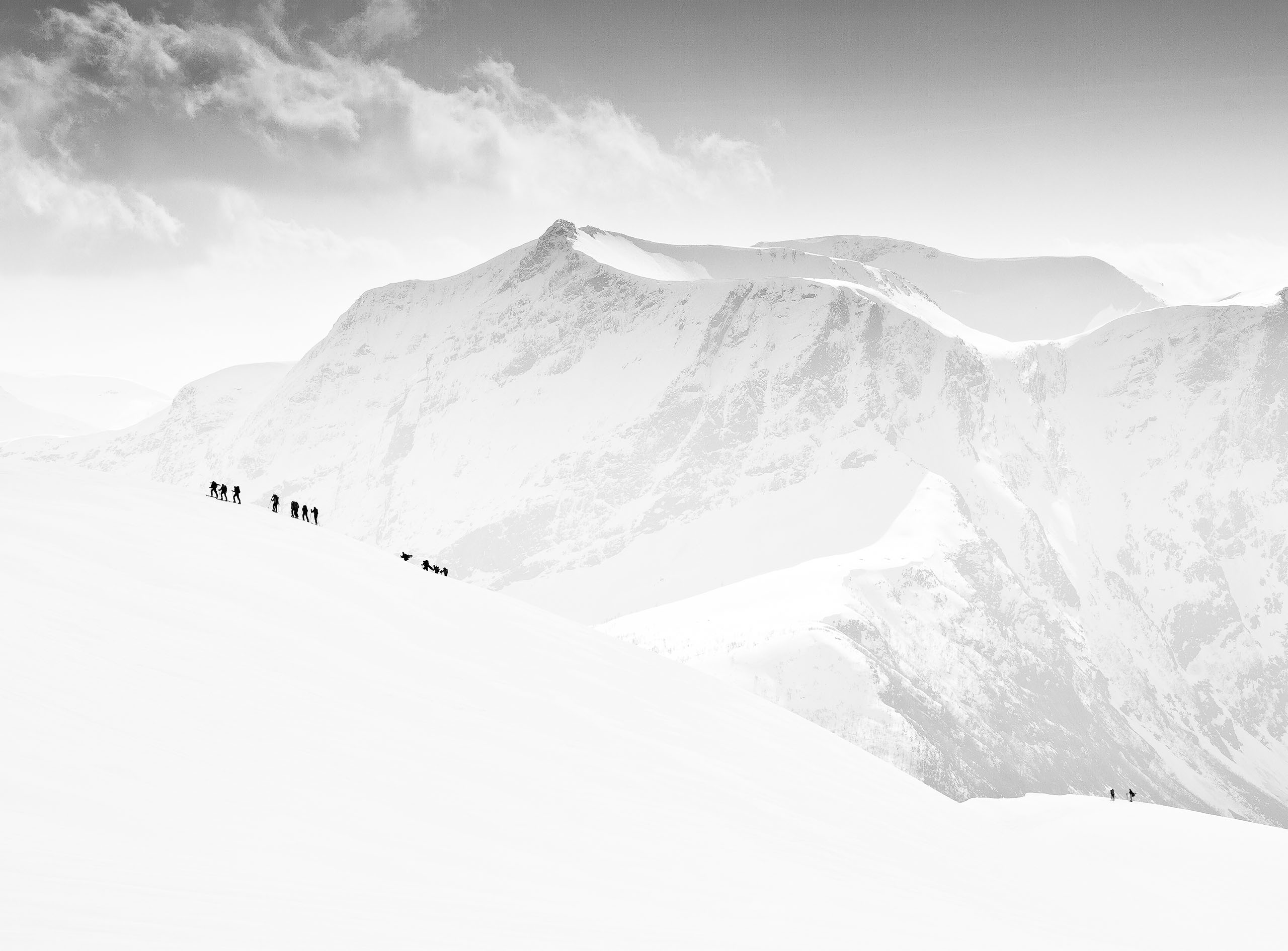
Can a camera function under these temperatures?
Posted 2 years ago
Hello, is it possible for a camera to function under -80 Celsius? And if so what kind of problems could one expect to have with thier camera?
Also what kind of problems could one expect to have with thier camera if one was to be working in such a low temperture and then quickly move the camera into a high temperture environment at around +60 - +70 Celsius? Would the canera still fucntion and what kind of problems if any could one expect to have.

Thanks
John
 
Posted 2 years ago
I learned it this way (old inuit wisdom) - and it`s simply physics. At -40 Degrees Centigrade one can spit in the air and it freezes when it touches ground. At -60 Degrees Centigrade one can spit and it freezes right away in flight before it touches the ground.

At -80 Degrees Centigrade even a Toughbook by Panasonic would not work, at least I strongly doubt it. At those temepratures your digital camera would would most likely experience serious shutter-damage, if the battery should work, which I doubt. The display will most likely not function.

Thze problem you`ll most likely have and that would damage the inner life or the lens of the camera permanently is humidity crawling into the mechanics/electronics (snow for e.g.).

If I were you, I wouldn`t risk exposing your camera at those temperatures - well, if you`re Pro that gets money for those shots go ahead. Which leads to another queerie:

How do you photograph at those temperatures? It`s absolutely dark, wind`s strong, sight will be very low if not zero.

Regards,

Herr der Fliegen
 
Posted 2 years ago
I forgot to mention that at those low temperatures (-80) the risk of permanently frozen limbs is imminent and not to be underestimated!

 
Posted 2 years ago
you must be very angry to do something like that ;)
 
Posted 2 years ago
angryjohnny wrote
Hello, is it possible for a camera to function under -80 Celsius? (...) and then quickly move the camera into a high temperture environment at around +60 - +70 Celsius?
Is it purely theoretical question or has it practical ground ? I can't figure out what/where/how could be the conditions for that, I mean in the framework of a photographic project. Just curious...
 
Posted 2 years ago
maybe a photoshooting on the moon?
 
Posted 2 years ago
Angry Johnny,

I would be nice, if you would share some more info here... I'm very curious about your plans.

The normal operating temperature of a D700, as an example, is 0?40°C (+32?104°F). Thus going to -80 and then +60/70 is a big leap!!!

As Herr der Fliegen sugested, even if you would find a camera that can operate, there's a doubt YOU would unless you want to attach your camera to a kite or something...
 
Posted 2 years ago
you would really need a hasselblad like they used on the moon. otherwise your film would brake. this special hasselblad was constructed in a way that the films didnt touch the camera.

p.s.: there are still 12 of those hasselblads lying around on the moon! with nice zeiss lenses!
 
Posted 2 years ago
Shooting geyser in very cold place ?
Volcano eruption in Antarctica ?
...
 
Posted 2 years ago
I've seen things you people wouldn't believe.
Attack ships on fire off the shoulder of Orion.
I watched C-beams glitter in the dark near the Tannhauser gate.
All those moments will be lost in time, like tears in rain.

Unless you have a super-camera !
 
Posted 2 years ago
Fabio, your quote is from a novel, I can`t remember which one but I read that quote in a novel, I`ve read.

Stephen King perhaps?

;-)
 
dow 
Posted 2 years ago
Hi John,

just call your arctic/antartic research lab or a university which does climate research like the UNIS in Norway/Svalbard. They can give you the information you need and they have real experience.

No guessing.

Kind regards

dow
 
Posted 2 years ago
Herr der Fliegen wrote
Fabio, your quote is from a novel, I can`t remember which one but I read that quote in a novel, I`ve read.
Blade Runner
 
Posted 2 years ago
Aha.. thanks. It`s been a long time since I`ve read that!
 
Posted 2 years ago
angryjohnny, doesn't matter what you want to shoot by that temperature, I'm with you ;-)
 
Posted 1 year ago
I'll go ahead and assume that you are going to be working at the Vostok Station, being that the only place on Earth to ever record temperatures near what you are talking about. The lowest reliably recorded temperature on Earth was recorded there on July 21st 1983, that temperature was -89c. Winters are usually in the -70c's though. Folks have been taking photos there, in those conditions since the station was established in the 1050's so I think you'll be just fine, to be safe I'd take a battery-less camera, and not wind my film too tight, lest it crack.
 
Posted 1 year ago
The temperature shock alone will already pose serious problems. A camera body is made of different materials, including for the more expesive models magnesium alloy and plastic, including rubber seals and the electronics inside. All precisely machined and fitted together. The problem with just heating or cooling these cameras in an abrupt way, will lead to severe mechanical stress induced by differences in cooling or heating rates due to the location of a specific part and by differences in the coefficient of thermal expansion for the different materials. These stresses may become very high for the stiffer materials, and may potentially lead to the delamination or the breaking of the body. And that is just when the camera is not in use. I would not know what would happen with the fine-mechanical shutter when actuating while undergoing the rapid temperature change. Perhaps some of the "simpler" models may do better, since they are perhaps less complicated. Perhaps a mirror-less, shutterless system may be better... Not sure though.
Another serious problem I would imagine, especially when cooling down, will be moisture. At high temperature air may contain a larger absolute humidity then under lower temperatures. When cooling down rapidly, the circulation in the body will not be fast enough to remove the excess humidity, and water droplets (or snow flakes or ice for low temperatures) will start to form inside the camera. Not sure how the camera would stand a mini-rain in its interior... When heating up again, some parts will take longer to heat up, and typically the larger glass elements in the lenses and the mirror and the pentaprism in the body will remain colder than the rest, and will attract condensation... This is something we all have experienced when taking a camera inside in a warm house after being out on a wet autumn or winter day. This happens already with modest temperature changes of 10 to 20 C, nothing compared with the 150 C changes you're talking about.

 
Posted 1 year ago
And he left us unknowing.... :-( Damnit.
 
Posted 1 year ago
Special housings are needed, heated blankets made to fit. Higher temps (-40) can be managed with special cameras with specific preparation and special handling. Hot and cold is a huge challenge for engineers and scientists in space vehicles, yet is it done today with common regularity. Where there is a will, there is a way -- the photographer's shutter never sleeps for long. Digital cameras are actually easier to make cold-proof. I would agree that one should consult those who have the knowledge and experience -- specific knowledge and experience.

D.
 
Posted 1 year ago
That first question from angryjohnny is like asking...................Do sharks shit in the sea
 
 
Compose a reply
You must sign in if you want to post a reply.
Fine Art Prints  -  Our books  -  Work with us  -  FAQ  -  About 1X
© 1X Innovations AB 2007-2011. All rights reserved.
 
 Stumble 1X