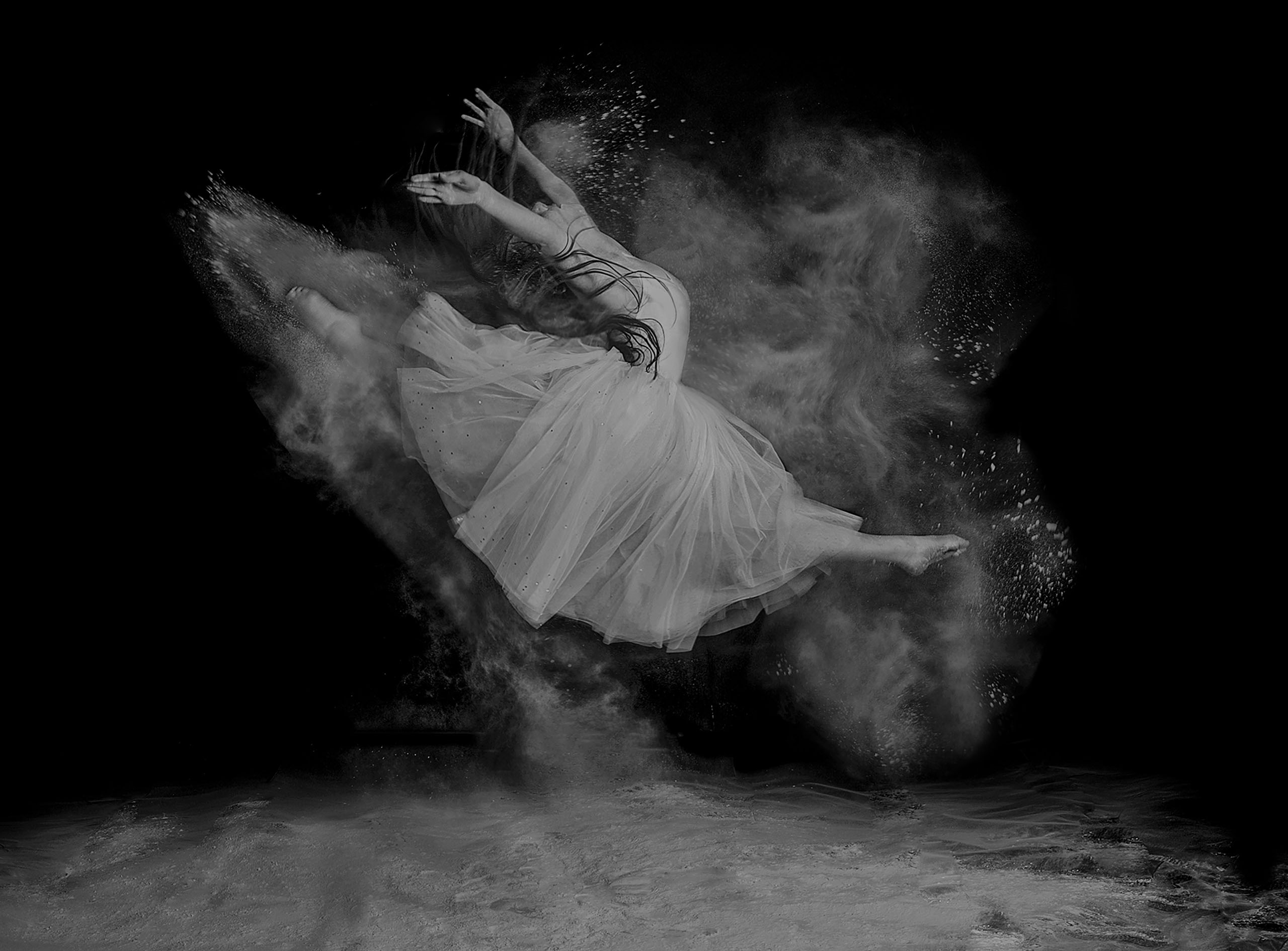
What is a mood?
Posted 3 months ago
As (as I understand) quite often a 'mood' is mentioned as one of the 'essential' 1x photo 'qualies' I though that it may be interesting to try to discuss it...

"A mood is a relatively long lasting emotional state. Moods differ from emotions in that they are less specific, less intense, and less likely to be triggered by a particular stimulus or event." - Wiki

"Moods generally have either a positive or negative valence. In other words, people typically speak of being in a good mood or a bad mood. Unlike acute, emotional feelings like fear and surprise, moods often last for hours or days." - Wiki

"Mood also differs from temperament or personality traits which are even longer lasting. Nevertheless, personality traits such as optimism and neuroticism predispose certain types of moods. Long term disturbances of mood such as depression and bipolar disorder are considered mood disorders. Mood is an internal, subjective state, but it often can be inferred from posture and other behaviours." - Wiki
 
Posted 3 months ago
Not sure three quotes from Wiki give us any real basis for discussion and certain no clues to your personal insight on the subject.

To me a mood is when I give place to the emotions of the moment and take the time and place to digest them and then allow them to take my mind on a bit of a journey. Some moods are fun and should be cherished and some are not but should not be ignored.

One of the great aspects of art is the it's ability to provoke emotion, and if we allow it, mood. When I submit a photograph under the Category of Mood it's an invitation to partake of the emotions that I hope it provokes and allow them to linger for a bit as a mood.
 
Posted 3 months ago
mood is a feeling for my concern, sth that you feel, emotionally when watching sth specific, -here a photograph in this term.


Posted 3 months ago
I think moods are connected to associations....
 
kenp 
Posted 3 months ago

Robert Jurjevic wrote
As (as I understand) quite often a 'mood' is mentioned as one of the 'essential' 1x photo 'qualies' I though that it may be interesting to try to discuss it...
I would suggest that photographs do not bear a mood, but may contain the elements that evoke a certain mood amongst the viewers. Thus the mood is not in the image, but in the viewers mind. Maybe a little like sheet music...
 
Posted 3 months ago
For me it's the 'taste' of the image
 
Posted 3 months ago
Charlie Packard wrote
For me it's the 'taste' of the image
Emotional 'taste'...
 
Posted 3 months ago
I would argue that it's the "flavor" of an image. Now, I'm taking a bit of liberty with the language here. But the distinction is that the "taste" is what the photographer puts in there to entice or provoke you. The "flavor" is the way each individual viewer reacts to that provocation. Now the former is definitely variable as we all know, composition, shutter speed, aperture, etc. What I think we need to make sure that we all realize is that the flavor or mood that an image might generate in a viewer is far more variable and it's completely out of our control. AND with photography, maybe more so than other mediums, very different with other photographers vs. a more general public audience.
 
Posted 3 months ago
Clyde Beamer wrote
When I submit a photograph under the Category of Mood it's an invitation to partake of the emotions that I hope it provokes and allow them to linger for a bit as a mood.
Reading that put me in a poetic mood. 
 
Posted 3 months ago
Wax on my King, wax on...
 
Posted 3 months ago
Clyde Beamer wrote
Not sure three quotes from Wiki give us any real basis for discussion and certain no clues to your personal insight on the subject.
I agree. Maybe tell us about how you feel mood should / can be perceived. You brought up the topic, so give us something to discuss from your POV.
 
Posted 3 months ago
Andre du Plessis wrote
Clyde Beamer wrote
Not sure three quotes from Wiki give us any real basis for discussion and certain no clues to your personal insight on the subject.
I agree. Maybe tell us about how you feel mood should / can be perceived. You brought up the topic, so give us something to discuss from your POV.
Is it assumed that Robert himself did not write those Wiki statements?

Two penguins were standing on the ice.  One says to the other, "For a minute, I thought you were wearing a tuxedo."  The other penguin replied, "What makes you think I'm not?'
 
Posted 3 months ago
I think a mood from a photograph generally lasts for a shorter time that Wikipedia would suggest. So if I am (or you are, or we are, teasing a bit) elegiac or elated after I see a certain picture, how long would that last? Not for days, not with me, for sure. As long as I look it at it, perhaps? In exceptional cases half an hour longer?
kenp wrote
I would suggest that photographs do not bear a mood, but may contain the elements that evoke a certain mood amongst the viewers. Thus the mood is not in the image, but in the viewers mind. Maybe a little like sheet music...
I like that.

I also think for a long while that often people like not art per se, but their feelings, their mood that this art invokes. Why some people listen to one and the same song many times? To get themselves in a pretty much the same emotional state, mood that they like, or want, or need...
 
gerard sexton  Senior Critic
Posted 3 months ago
Robert firstly the clear point to make regarding the word mood is that it is regarded as a psychological state. As you correctly point out a mood can be positive or negative. And the underlying reason behind a mood is that a mood will have been triggered by any number of emotional responses.
kenp wrote
I would suggest that photographs do not bear a mood, but may contain the elements that evoke a certain mood amongst the viewers. Thus the mood is not in the image, but in the viewers mind.
As Kenp suggests a photograph is a vehicle that can transport us to place where we give fresh vitality to similar emotional responses or reactions that we associate with those past events or experiences. I will be bold & say that in fact you cannot have a mood in a photograph but that photograph can convey something that triggers a mood & clearly this can be positive or negative. Mood is a collective word for a bunch of emotions it describes a state. If you consider also the commonly held misconception that someone can make you feel like such and such it is nonsense as nobody or nothing can MAKE you feel you feel in response or in reaction to something or rather just as a photograph cannot MAKE you feel.

Therefore it follows that all photographs as in fact all art will have the propensity to convey mood to illicit an emotional response which therefore makes a nonsense of having a separate category mood!

However while the latter may be the case in the strictest use of the term mood it is understandable to devise a category that gives carte blanch to photographers to interpret mood outside of the norms & conventions of all the other more rigid categories perhaps enabling a greater freedom around post production manipulation to the use of in camera techniques that distort & twist things so that the results & final image are not so normally tangible & are placing more emphasis or are inviting the viewer to interpret the image through their own experiences & feelings. Thus approach is more arbitrary more flexible less rigid.

So the choice of the word mood in terms of art has come to be understood as more metaphysical. Lets say for example I take a number of images that appear in this category I would describe them as follows;

http://1x.com/photo/46527/category/mood/latest-additions/autumn-symphony

Haunting; delicate; hopeful; certain;

http://1x.com/photo/45313/category/mood/latest-additions/heavy-winter (there is clearly lots of photoshop here)

cold; compassion; fragile; helpless

But coming back to you Robert I like Clive also wonder why you choose to raise this topic since you never added your ideas or thoughts just stating it would be good to start a discussion. Is your mood purely altruistic? Not sure. I suggest more a disgruntled artist concerned at failing to get your work recognised here & disturbed by the poor interpretation of this category mood. But I am certain you can enlighten us.
Anna Golitsyna wrote
I also think for a long while that often people like not art per se, but their feelings, their mood that this art invokes.
And Anna this is not touche or am I attempting to demolish your statement rather I would challenge this if I understand your jumble of words correctly. If you are correct then I would reckon on seeing more comments here than just one or two or three words statements examples of which might be "I like it" "I love it" "excellent: "great". None of these statements describe a feeling or emotion or a mood! because I think rather than what you suggest few people are able to see any connection between their feelings & their viewing experience with art they struggle to put words to feelings & emotions men in particular!
Anna Golitsyna wrote
Why some people listen to one and the same song many times? To get themselves in a pretty much the same emotional state, mood that they like, or want, or need...
Anna Golitsyna wrote
I think a mood from a photograph generally lasts for a shorter time that Wikipedia would suggest. So if I am (or you are, or we are, teasing a bit) elegiac or elated after I see a certain picture, how long would that last? Not for days, not with me, for sure. As long as I look it at it, perhaps? In exceptional cases half an hour longer?
Anna I am interested to read how you can almost contradict yourself in the same post. You use the analogy of listening to music to present an idea that in fact people will hook onto certain songs to continually wrap themselves in a mood to prolong it yet you suggest that a mood in a photograph (I would add painting) disperses fairly quickly. Why then do people buy prints & paintings to hang on their walls is this not a similar mode of permanently capturing the mood evoked by a particular piece as with music? The act of buying the print or the original (lets us discount for this moment the high end transfers & exchanges that are not all about emotion & mood well getting rich I guess is almost a mood) is the same as continually playing a piece of music. 

An interesting adjunct to this discussion would be how words both written & spoken can evoke a mood easier than a painting or a photograph. When someone else attaches words to their feelings or ideas we can become incensed or enraged very quickly perhaps because we can instantly recognise meaning in these words (though how often we are right in this interpretation is up for grabs & a whole new debating point) yet because art is that much more impenetrable often we find it difficult to place meaning on a feeling we have & how it links to what we see. Maybe this is another good reason behind having a category called mood because it may encourage us more to find these associations.

 
Posted 3 months ago
i think every photo has a mood (if i understand the word correctly)... "boring" everyday photos have the "boring everyday mood", holliday photos have the "holliday mood" and so on...

other moods we like, like the "misty morning mood" or the "sad and melancholic mood".... 

important is that the mood gets transported by the photo, but, every viewer has different association to different moods...
 
Phyllis Clarke  Forum moderator
Posted 3 months ago
gerard sexton wrote
Robert firstly the clear point to make regarding the word mood is that it is regarded as a psychological state
Gerry I saw this post earlier and thought oh my  - my field - maybe I can write something relevant. I went to write and had to stop for something...and when I came back I saw your post and thought...

Did I write it already!!!! 
So, I have to agree with most if not all of what you have said.

Robert - Wiki is really not a great source to understand the mood of a human being. It can be something quite simple like have a series of bad experiences that leave you irritated for a few days...or it could be bi-polar disorder which leaves you crippled for a lifetime. So just asking the question 'What is Mood' really is too broad a question for a forum discussion.

I like how Gerry brought the concept of mood or moods back to photography and how they are related. Also his specific examples were very good. In particular I liked this one...


Notice how many people added this to their favorites...notice how many comments there are...The photo 'touched' people on some emotional level. The same level - the same emotions..i would say probably not.

I agree that a mood can be good or bad...but at times -  it is a combination of both...I can look at the bird and feel like I want to cry ...later at night I look and think how wonderful, this bird can protect itself...by putting its head down.. My reaction is going to be at least in part  -what I am experiencing internally...and trust me most of the time it will not even be conscious. Often our own personal histories will play a very major role. We take who we are and project that onto the photograph.  And since were are always changing, our reactions will change also.

I can't say i see it as being only inside the person or inside the photograph...like all interactions from birth on..it is a reciprocal adaptation - between the two.

What is very interesting about this picture for me - is how the photographer was able to convey such a strong and powerful sense of 'mood' with just one pose, and some  snow such a wide gamut of emotions and feelings. This is not a simple task. I have over the years now seen many pictures in the Critique where someone is struggling to show a psychological concept, and their image is far too confusing, because they are trying too hard. They are using their intellect alone, and often that does not work well to show an emotional state. 

So if you are interested in creating more mood in your photos for whatever the reason...my suggestion is to keep it simple, because you can always add...more later.

Phyllis
 
Posted 3 months ago

Phyllis Clarke wrote
Robert - Wiki is really not a great source to understand the mood of a human being.
Hi Phyllis,

Generally, I agree with you that you cannot trust Wikipedia 100% (I'd estimate it 95% on non-controversial issues, on average). But in this particular case I am actually interested in your opinion about the OP citations: do you see some mistakes or misinterpretations? Or are these citations just incomplete? They don't talk about art, that is certainly so.

-Anna
 
Posted 3 months ago
gerard sexton wrote
I will be bold & say that in fact you cannot have a mood in a photograph but that photograph can convey something that triggers a mood & clearly this can be positive or negative. Mood is a collective word for a bunch of emotions it describes a state. If you consider also the commonly held misconception that someone can make you feel like such and such it is nonsense as nobody or nothing can MAKE you feel you feel in response or in reaction to something or rather just as a photograph cannot MAKE you feel.
So you are saying that a photograph can trigger a mood (via something) but cannot make you feel. Just to understand your thought better: are you saying that a photograph (or any art) is not guaranteed to invoke a feeling, yet can do so? Or do you mean something else?
"commonly held misconception that someone can make you feel like such and such it is nonsense". It happens all the time. For example, if this someone is a manipulator or a bully, and the other person does not understand it or is not able to stand against it.

I liked a lot your description of the Mood category. Your second mood example, a bird under a winter storm, is one of my favorite pictures on 1X :-) .
-----------------
gerard sexton wrote
If you are correct then I would reckon on seeing more comments here than just one or two or three words statements examples of which might be "I like it" "I love it" "excellent: "great". None of these statements describe a feeling or emotion or a mood! because I think rather than what you suggest few people are able to see any connection between their feelings & their viewing experience with art they struggle to put words to feelings & emotions men in particular!
I assume this was in response to my thoughts below (let me know if this is not the case). Well, I think that "I like/love it" or "Great/Excellent" do describe, albeit briefly, one of the following emotions:  interest, attraction, admiration, delight, pleasure, etc.(http://en.wikipedia.org/wiki/List_of_emotions) . As of why comments are so brief? A topic of a new discussion with a poll among members :-) .
Anna Golitsyna wrote
I think a mood from a photograph generally lasts for a shorter time that Wikipedia would suggest. So if I am (or you are, or we are, teasing a bit) elegiac or elated after I see a certain picture, how long would that last? Not for days, not with me, for sure. As long as I look it at it, perhaps? In exceptional cases half an hour longer?
----------
gerard sexton wrote
Anna I am interested to read how you can almost contradict yourself in the same post. You use the analogy of listening to music to present an idea that in fact people will hook onto certain songs to continually wrap themselves in a mood to prolong it yet you suggest that a mood in a photograph (I would add painting) disperses fairly quickly.
It depends on the context, no contradiction. If you admired a picture never to return to it, or maybe just a couple of times, then the mood is more likely, I think, to disperse quickly. If you return to a picture over and over, or if you buy it for your house as you write later in your post, then yes, probably partially to prolong the mood or to allow yourself a possibility of "re-creating the mood on demand". It's a whole new topic again, though, why people hang pictures on the walls. Certainly, not only mood is involved. I also think that music that we like is a more powerful mood trigger than pictures that we like (yet another topic to ask what people think in this respect). And I agree with you that on average words are even more powerful mood triggers.

P.S. One of the differences between music and photography as mood triggers is the average time people listen to their favorite music or look at their favorite picture. An average modern song is usually longer than 3 minutes. A part of a classical piece with about the same mood is even longer than that. I'd think that on average we look on a picture for a much shorter time, especially in the context of 1X where there are so many pictures to choose from. So the mood has much longer time, strictly on average, to develop, to fully develop, when we listen to music, than when we look at a photograph. You have to dedicate time to your favorite music as long as it lasts, yet you can visually scan a picture in mere seconds....
 
Phyllis Clarke  Forum moderator
Posted 3 months ago
Anna Golitsyna wrote
citations: do you see some mistakes or misinterpretations? Or are these citations just incomplete?
In a sense, I see both...

What they offer is a very basic understanding of what a mood is; which as a result offers us a very limited understanding. So in that sense they will be incomplete.

Also, they seem to make generalizations which are not necessarily accurate. They require further investigation.

I tried to speak above of some of the issues the wiki quotes presented.

If we looking for a quick bit of information - I think wiki works okay...but can you imagine me trying to learn Quantum Physics using it?  Laughing now..actually when I want to know about QP I write to Colmar or Kavah! 

Phyllis

 
gerard sexton  Senior Critic
Posted 3 months ago
Anna there are two extremely important words in all our lives the first is choice the second is will. There are very few situations in any of our lives where we are unable to exercise both of these. And specifically in the context of Roberts original post it is entirely feasible that there will be no instances where you will be forced against our will to choose to like or dislike a piece of art. To imagine anything else is frankly why people loose hope & we all can imagine the consequences of total despair can't we?

Nobody can or will MAKE you like or dislike anything; you do so of you own volition to say the opposite is to deny you have free will. Even in the case of bullying or manipulation (I assume I hope correctly you are not talking about photoshop here) you are not being made to do anything you are just succumbing to a greater force & therefore abdicating any responsibility for your actions to another power. It is the mantra of the negative I can just hear it "you have put me in a mood"  "you make me angry" "you always make me feel stupid" followed by stomping feet slammed doors withdrawal prolonged silence disassociation etc etc etc. I can't imagine hearing someone say "you make me love you"....I must state here that I am totally against any form of bullying or manipulation (not photoshop).

By stating that you are being MADE to do something against your will like crying or getting angry or becoming elated you are denying the ability to choose. And here is the rub. This is a common theme in a world that is driven by fault! In other words when you claim that an other MAKE(S) you do something you immediately apportion blame on that person & absolve yourself of any part of that outcome or consequences placing the fault elsewhere. It is a facile notion and frankly the sooner all of us recognise this the better place this world will become. This belief is the belief that fashions wars arguments fights divorce hatred & proliferates many more negative events in our lives. It is the ultimate self fulfilling prophecy!

Once you can take responsibility for your actions then you can take responsibility for doing something about it next time. A painting or a photograph cannot MAKE you like it. A photograph or a painting cannot MAKE you go into a mood.

A photograph or a painting can invite you to regress into an old experience to associate or attach to a deeper emotion but in all of this you can choose to go there or not. You can deny it exists or you can accept it. And if you accept it you can shape it & how you shape it is to put words to this emotion to explain it to give understanding to it so you can share it.

Great & excellent I imagine (I know but have the time to check) are not in the Wiki list of emotions & do not elucidate in any way upon what the emotion is that is stirring inside us. Simply it doesn't say anything about the why yet 9 times in 10 most know why but fail to share it either because they cannot put words to feelings or haven't got time or both.

And yes some understandably find it difficult to place words to feelings & emotions for many it is a cultural thing deep rooted & you know what it is because there are so many cultures in this world that would have us deny our emotions which brings us full circle back to the beginning & your inadvertent choice of the word manipulation. We (I use the word we as a general we because I cannot place a volume on this) have been manipulated into believing it is not the done thing to have emotions. No wonder some can only use high level words such as like/great/excellent which are supposed to convey our reasons for liking.

None of these words offer anything other than yes encouragement. They do not offer growth! & growth is a common human need. I cannot deny that I enjoy & am grateful reading the comments I receive against my images but few tell me anything about the person leaving them few express words that tell me what it is in my work that excites them or affects their mood or persuades in them their taste. To say I like the mood tells me nothing because what is the mood that they see or feel. Of course when it comes to language you could dismiss this debate as meaningless but I do not because it is about gaining understanding it is about learning or growing it is about sharing it is about finding common ground & it is about taking responsibility for and acknowledging our feelings & ultimately our mood as our own not something that is created by others.

Robert although you have disappeared since you launched this pebble in the pond & not come back to add to this debate probably because unlike us you are out with your camera!I hope you sense that this post of mine is not drifting too far off your original theme if it has I apologise.


Posted 3 months ago

Phyllis Clarke wrote
Anna Golitsyna wrote
citations: do you see some mistakes or misinterpretations? Or are these citations just incomplete?
In a sense, I see both...

What they offer is a very basic understanding of what a mood is; which as a result offers us a very limited understanding. So in that sense they will be incomplete. Also, they seem to make generalizations which are not necessarily accurate. They require further investigation.

OK, further investigation is required to know either way whether  these citations are accurate.
Phyllis Clarke wrote
If we looking for a quick bit of information - I think wiki works okay...but can you imagine me trying to learn Quantum Physics using it? Laughing now..actually when I want to know about QP I write to Colmar or Kavah!
Wikipedia is not, of course, a source of information to actually learn Quantum Mechanics (if you type Quantum Physics it will correctly redirect you to Quantum Mechanics). You need a more detailed textbook for that, as a bare minimum, not to mention all the prerequisite knowledge. But, assuming you do have this prerequisite knowledge, the corresponding article is, not surprisingly for me, very good and thorough. This because such articles, not only in Physics, almost invariably are written by professionals and, very importantly, are watched mostly by professionals. In a particular case of the quantum mechanics article watched by 795 watchers. In such a situation it is very difficult to "vandalize" such an article or write incorrect statements there for any significant period of time. So depending on how much you want to learn about quantum mechanics (I know, it's hypothetical only) Wikipedia just might be your answer, almost guaranteed to be correct within a given level of details. One may try this as well, http://en.wikipedia.org/wiki/Introduction_to_quantum_mechanics :-) .

And these thoughts apply to many and many areas of knowledge reflected in Wikipedia. The less hard science it is about, the more controversial issue is, the more probability that a given article may not appear accurate. But Wikipedia is also surprisingly good in presenting different points of view, like a brief article about emotions that I quoted for Gerard, which presents different emotion classifications. I may or may not have time today to answer to Gerard but rest assured I do have what to disagree about and to agree with  ;-) ....
 
Phyllis Clarke  Forum moderator
Posted 3 months ago
Anna Golitsyna wrote
Wikipedia is not, of course, a source of information to actually learn Quantum Mechanics (if you type Quantum Physics it will correctly redirect you to Quantum Mechanics). You need a more detailed textbook for that, as a bare minimum, not to mention all the prerequisite knowledge. But, assuming you do have this prerequisite knowledge, the corresponding article is, not surprisingly for me, very good and thorough. This because such articles, not only in Physics, almost invariably are written by professionals and, very importantly, are watched mostly by professionals. In a particular case of the quantum mechanics article watched by 795 watchers. In such a situation it is very difficult to "vandalize" such an article or write incorrect statements there for any significant period of time. So depending on how much you want to learn about quantum mechanics (I know, it's hypothetical only) Wikipedia just might be your answer, almost guaranteed to be correct within a given level of details. One may try this as well, http://en.wikipedia.org/wiki/Introduction_to_quantum_mechanics :-) .
I don't have a clue as to  your point here with this post. We are not discussing Quantum theory are we? I think you understand I used that as an example only.

However, now I will give you an example using Mood as related to psychology and probably it will answer your first question about accuracy too.

Wikepeida..on Mood

Reading those first few parts tell you very little about the psychological state of mood as it relates to the many kinds, types and of course to treatment itself.

 For a photo website sure...why not..but for something more serious I would say no of course not.

Example...click on Mood Swings..what do you see..ONE mood disorder is Bipolar...Just learning about this disorder sufficiently to offer treatment is in and of itself -  a lifetime of study..

Look at the bottom of the page..see also...

Borderline Personality ...lets do that one..its my specialty actually.
Scroll the page..to the bottom...to get a sense of how complex this ONE disorder is. And yes of course mood is a major part of two types of Borderline Disorder for sure.

So..even if the quotes are great and the sources good....How could I really learn about this Disorder without reading all those books?

And even if I read all those books I need to then put it into Context.... In other words I need to study basic psychology first, and then probably for a Borderline Personality - Ego Psychology next..and then after that the newer materials..
So when you say...


Anna Golitsyna wrote
I think a mood from a photograph generally lasts for a shorter time that Wikipedia would suggest.
I would say again..don't trust Wikipedia.
In this case trust yourself...if a photograph lasts for a shorter time than Wikipedia says it does..for you....trust yourself.  I say this because your own knowledge of your moods and how they work are going to be much more accurate than the overview given in Wiki.  They will be more personal and more specific to you and your life. So in this case you disagreed with Wiki on the length of a mood...probably because you see mood in different way...

Anna Golitsyna wrote
after I see a certain picture, how long would that last? Not for days, not with me, for sure. As long as I look it at it, perhaps? In exceptional cases half an hour longer?
That is your experience...so trust it. Clearly in this case Wiki does not have an accurate understanding of mood as to how it relates to you.


Tell me would you use only Wikipedia to write a Doctoral Dissertation or a book on a subject? 

Phyllis...
 
Posted 3 months ago
Phyllis Clarke wrote
Anna Golitsyna wrote Wikipedia is not, of course, a source of information to actually learn Quantum Mechanics ..... This because such articles, not only in Physics, almost invariably are written by professionals and, very importantly, are watched mostly by professionals. In a particular case of the quantum mechanics article watched by 795 watchers. In such a situation it is very difficult to "vandalize" such an article or write incorrect statements there for any significant period of time. ....

I don't have a clue as to your point here with this post. We are not discussing Quantum theory are we? I think you understand I used that as an example only.
I have written that "I know, it's hypothetical only", so yes, I understand that you used it as an example. You omitted my point in your quote, so maybe you missed it. In that case, briefly repeating the gist of my point: "And these thoughts apply to many and many areas of knowledge reflected in Wikipedia." In short: Wikipedia is much better and much more accurate in many areas (see details in my previous post) that you seem to think.
Phyllis Clarke wrote
Reading those first few parts tell you very little about the psychological state of mood as it relates to the many kinds, types and of course to treatment itself.
Well,  it's an introduction only thus says little. However if you start clicking on links in this introduction, for example the "emotional state" one (mood according to this intro is an emotional state), then you see much more information and, of course, there is no need to restrict oneself to an introduction only.
Phyllis Clarke wrote
How could I really learn about this Disorder without reading all those books?
Depending on your goal. If the goal is to offer knowledgeable treatment, of course Wikipedia is not enough, for pretty much the same reason Wikipedia is not enough to actually learn Quantum Mechanics (I have mentioned that). But, again, within the given level of details (that is a very important part of my point!), Wikipedia tends to be pretty accurate for the reasons I already mentioned in my previous post.
Phyllis Clarke wrote
Anna Golitsyna wrote I think a mood from a photograph generally lasts for a shorter time that Wikipedia would suggest.
I would say again..don't trust Wikipedia....
That is your experience...so trust it. Clearly in this case Wiki does not have an accurate understanding of mood as to how it relates to you.
A mood from an art piece is a very specific kind of mood. Unless I missed it, the articles that we discussed just do not talk about it.
Phyllis Clarke wrote
In this case trust yourself...if a photograph lasts for a shorter time than Wikipedia says it does..for you....trust yourself..
Me myself is not statistics. Yes, I can glean something within myself, but I am much more interested in what other people collectively and individually feel, think and write about art. Also, I think that pictures much more often trigger short-lived emotions and not longer lived mood. So far I don't see Wikipedia being inaccurate in this particular respect.
Phyllis Clarke wrote
Tell me would you use only Wikipedia to write a Doctoral Dissertation or a book on a subject?
No. I pretty much already wrote about it: "Wikipedia is not, of course, a source of information to actually learn Quantum Mechanics ... And these thoughts apply to many and many areas of knowledge reflected in Wikipedia. "
 
Phyllis Clarke  Forum moderator
Posted 3 months ago
Anna Golitsyna wrote
Depending on your goal
Well,I read through all of what you wrote in your last post twice. 

I cannot see any new questions for me. 

Also, the statements you have made I think we have covered already, so there is not much to discuss about those either.

However,  I actually do have two new questions for you.

The first is just to ask for some clarification. Did you have any particular reason, for writing this last post to me?  Was there anything specific you wanted either from me or anyone else reading the post ? If so can you say what that might be?

The second is to ask this. 
Looking back at the OP here from Robert and leaving Wikipedia out of it - just from your own personal perspective - do you think mood in a photo matters to you, and if so - can you say how and in what way it might make a difference?  Now, if you have talked about this already above and I missed it, can you just give me the benefit of the doubt and repeat it and maybe talk about it in more depth. That would be of interest to me.

Thanks,
Phyllis

 
Posted 3 months ago
Phyllis Clarke wrote
Did you have any particular reason, for writing this last post to me? Was there anything specific you wanted either from me or anyone else reading the post ? If so can you say what that might be?
Besides an obvious reason of answering a post addressed to me, which also included your questions to me? To rephrase my opinion about Wikipedia in general and about mood in Wikipedia (see the OP) because it turned out that there was still some misunderstanding between us in this respect. I agree with you that it's all covered now (as much as we are both willing to cover it in this discussion).
Phyllis Clarke wrote
do you think mood in a photo matters to you, and if so - can you say how and in what way it might make a difference?
Here are I pretty much agree with Ken and Gerard:
kenp wrote
I would suggest that photographs do not bear a mood, but may contain the elements that evoke a certain mood amongst the viewers. Thus the mood is not in the image, but in the viewers mind. Maybe a little like sheet music...
    So, back to your question, I don't think that a photo has mood. But there are numerous well known and less known elements of a picture, correspondingly less original and more original, that can trigger a certain emotional state, be it a short-lived emotion or a longer lasting mood (deliberately quoting Wikipedia here). Well known are lone trees and lone people, a longing sad expression (especially of a beautiful young girl) etc. Inasmuch that I know that the lone tree is there for the reason to evoke, say, melancholy in me, I am still not immune to its well-proven charms. Less so than before, being a bit jaded in this respect, true. I strongly prefer less defined moods, less tangible ones, or expressed using less common elements. Kaveh's today excellent series come to mind, a mixture of more common and less common elements. But just "mood triggering elements" by themselves is not all. How they are combined, how they are expressed, what else is there, are all important factors as well, in general and for defining an emotion or mood.
     I am fine with pictures with no mood per se, like many nature shots, where I can admire (still an emotion) wildlife's beauty, or the light, or learn something about the animals behavior. No mood in a picture in a sense discussed so far, yet still emotions in me.

Hoping for a reciprocal favor, Phyllis, of you answering your own question :-) . Somebody else as well?

-Anna
 
Posted 3 months ago

Anna Golitsyna wrote
Somebody else as well?
Post #2 above, I'm feelin' a bit ignored. Ken said pretty much the same thing I did, but nobody has really responded to me. And I think you girls should schedule a meet up!! Maybe in Annapolis, a beautiful town for a walk around...
 
Posted 3 months ago
Clyde Beamer wrote

Anna Golitsyna wrote
Somebody else as well?
Post #2 above, I'm feelin' a bit ignored. Ken said pretty much the same thing I did, but nobody has really responded to me. And I think you girls should schedule a meet up!! Maybe in Annapolis, a beautiful town for a walk around...
Clyde, 7 people liked your post and you feel ignored???? Alrighty, have one more, well deserved :-)
 
Posted 3 months ago
The physicist:  Psychology is easy.  Physics is hard.

The psychologist:  Physics is simple.  Psychology is complex.

I love physics.
I love psychology.
I find long forum exchanges to be tedious to follow, including those I'm involved in.
 
Posted 3 months ago
Yes, yes, King, I remember your preferences: shorter posts and shorter discussions :-) BTW, I think that both physics and psychology, when studied and applied in earnest, are hard and require a lot of time to learn. Still psychology books "for everyone" are much more popular than physics books "for everyone". Closer to our everyday needs and everyday life, perhaps?
 
Posted 3 months ago
Anna Golitsyna wrote
Still psychology books "for everyone" are much more popular than physics books "for everyone". Closer to our everyday needs and everyday life, perhaps?
On my bookshelf within easy reach, among others:

Victor Frankl's "Man's Search for Meaning"
Richard Feynman's " Six Easy Pieces"
James Gleicks' "Genius: The Life and Science of Richard Feynman"
Arthur Reber's "Dictionary of Psychology" (a great read)
Roger Greene's "MMPI-2/MMPI: An Interpretive Manual"
...and, perhaps most important
Alan Brown's "The Psychology of the Simpsons"


Posted 3 months ago
All good read :-) . The last one, have to admit, caught most attention ;-)...
 
Phyllis Clarke  Forum moderator
Posted 3 months ago
Anna Golitsyna wrote
I strongly prefer less defined moods, less tangible ones, or expressed using less common elements. Kaveh's today excellent series come to mind, a mixture of more common and less common elements. But just "mood triggering elements" by themselves is not all. How they are combined, how they are expressed, what else is there, are all important factors as well, in general and for defining an emotion or mood.
Thanks for explaining what you prefer in your mood...


Anna Golitsyna wrote
do you think mood in a photo matters to you, and if so - can you say how and in what way it might make a difference?
Well as you know when we repost from a quote...we get a person who did not make the quote. So yes..that was my question to you....not your question...just in case anyone - not you  of course - is wondering...

Yes, mood in a photo matters to me quite a bit. I never thought about this much before joining one X...but here I started to notice that some element of  mood in a picture really made me stop/connect/ and want to keep looking.

If something in a work of art resonates with me, it is usually something about the mood in the shot..and it is often on a psychological level. So many things can bring this about - the lighting of course, the scale of objects in relationship to each other, mystery of something unknown in the picture, something historic I identify with,  specific ethnic groups like anything Italian (very personal for me), my home NYC, and my second home in Greece. 

After that it is probably expressions on people, how a blur might create a stopped moment in time..freezing hair wildly...basically anything that I can associate my own life experience with.

And then there are those photos that I would say have 'layers upon layers of interest" and much of that interest for me comes from the  many and complex psychological elements in the picture. When i look at these kinds of photos I am feeling very deeply because the emotion is in the undergrowth of the unconscious which is not knowable in any easy way.

One One X member that does this for me is Angela Bacon Kidwell.  Just one photo -any one - can inspire me for days..because it reaches down deep to the places we are not aware of. What it pulls out is anybody's guess..but for sure there is never a question when I see one of her pictures that I know I am looking at Art  - it goes beyond the ordinary...and lifts me to another place.

The more I think about this as I write I would have to now admit that all photos which have mood will probably have a greater influence on me - long term.  So while I might like pictures that maybe do not have much mood, I think I love the ones that do have it...

Phyllis
 
Phyllis Clarke  Forum moderator
Posted 3 months ago
King Douglas wrote
I find long forum exchanges to be tedious to follow, including those I'm involved in.
I can find that also if they are not focused, and very intellectually bent. This is perhaps why I like Cohen so much his music  can go either way...I have his new CD BTW..Bill bought it...it is brilliant. 

Phyllis
 
Posted 3 months ago

King Douglas wrote
I find long forum exchanges to be tedious to follow, including those I'm involved in.
I find this layout very difficult to read, especially long posts. The individual lines are way toooo long. Narrower columns are far easier to read. Newspapers proved that long ago, but hey! You can't tell this new generation anything...

 
Posted 3 months ago

Clyde Beamer wrote
King Douglas wrote
I find long forum exchanges to be tedious to follow, including those I'm involved in.
I find this layout very difficult to read, especially long posts. The individual lines are way toooo long. Narrower columns are far easier to read. Newspapers proved that long ago, but hey! You can't tell this new generation anything...
I find that empty lines after quotes visually lengthens a post which is not otherwise that long, especially when double quotes are involved like here, right above. It is, probably, better for the readability purposes though. On my computer I wrote 2 lines in this post but with the double quote and its text it takes 16 lines.
 
Posted 3 months ago
We might need a philosophical definition of "mood" instead of a psychological one. I will try to track one down from one or two of the sacred cows of philosophy and will bring it to the table.  
King Douglas wrote
Alan Brown's "The Psychology of the Simpsons"
I woudnt be surprised if a whole chapter of the simpsons is dedicated to mood :)
 
Posted 3 months ago
This is what Heidegger elaborated about mood:

A human being who?as we say?is in good humour brings a lively atmosphere with them. Do they, in so doing, bring about an emotional experience which is then transmitted to others, in the manner in which infectious germs wander back and forth from one organism to another? We do indeed say that mood is infectious. Or another human being is with us, someone who through their manner of being makes everything depressing and puts a damper on everything: nobody steps out of their shell. What does this tell us? Moods are not side-effects, but are something which in advance determine our being with one another. It seems as though a mood is in each case already there, so to speak, like an atmosphere in which we first immerse ourselves in each case and which then attunes us through and through.Heidegger, Fundamental Concepts of Metaphysics
 
Posted 3 months ago
Hegel:

What is mood?

Hegel defines mood [Stimmung] as a form of sensibility [Empfindung], and so to understand mood we must first understand what sensibility is. The distinction that we might observe from the outside of someone sleeping and waking is roughly what, from the inside, is sensibility. Sensibility is finding oneself, being awake to one?s own being. In writing about Empfindung, Hegel is trying to characterize that most basic reality of what it is to be aware, and that is primarily to be alive to, to be awake to, oneself.

Emotional Subjects: Mood and Articulation
in Hegel?s Philosophy of Mind
John Russon
 
Posted 3 months ago
And here is a free read about mood and ethics. Philosophy´s Moods: the affective grounds of thinking   

 
Posted 3 months ago
Anuar Patjane wrote
Emotional Subjects: Mood and Articulation in Hegel?s Philosophy of Mind John Russon
Let's see.  Thesis...antithesis...........

Can we talk about breasts now?  Pretty photos of women's breasts almost always put me in a good mood.
 
gerard sexton  Senior Critic
Posted 3 months ago
King I find your humour very enlightening. 
 
Chris Dixon  Book editor
Posted 3 months ago

gerard sexton wrote
King I find your humour very enlightening.
...yeah. Puts me in a strange mood :-)
 
Posted 3 months ago
gerard sexton wrote
King I find your humour very enlightening. 
Hey, I'm serious.

Okay, here's a simple definition of mood from Arthur S. Reber's "Dictionary of Psychology" to which I referred in an earlier post:

mood.  Any relatively short-lived, low-intensity emotional state.  Used freely.

I can go along with that.  Moods change.  Moods are labile, which is to say changeable.  Browse the front page and experience changes in your mood as the content, subject and actions displayed in the images change.
 
Posted 3 months ago
King Douglas wrote
Can we talk about breasts now? Pretty photos of women's breasts almost always put me in a good mood.
Hi King! Concrete examples may clarify what exactly do you mean. :)

Here is a 1x example (I personally do not like so much, particularly the composition with the legs, etc., also the light, etc.)
http://1x.com/photo/42417

I wonder if the mood in this photo is 'acceptable'...
http://www.flickr.com/photos/alessiacampostrini/4775694578

 
Posted 3 months ago
For me 'the mood' may be that very 'essence' of what I 'like' ('like' in the most complex possible sense) and is probably entirely subjective. It perhaps has to do a lot with the 'meaning' (which is almost impossible to define). Pretty hopeless (I know :) ).
 
Posted 3 months ago
Robert Jurjevic wrote
Concrete examples may clarify what exactly do you mean. :)
When thinking of women's breasts, the word concrete rarely comes to mind.
 
Posted 3 months ago

King Douglas wrote
When thinking of women's breasts, the word concrete rarely comes to mind.
I see you really ARE out of touch with life in SoCal...
 
gerard sexton  Senior Critic
Posted 3 months ago

King Douglas wrote
Hey, I'm serious.
King so was I!
King Douglas wrote
When thinking of women's breasts, the word concrete rarely comes to mind.
But marble (marvel) does!

The concept of mood in fact can be associated with the wonderment at the thought for (some) men & (perhaps some) women of breasts. But without words associating the mood to a sensation we are none the wiser. The mood has to be guessed at to dimension it.

In a philosophical sense then the mood has a cause or as the Greeks called it an "aition" hence sensation. A mood is or could be a melange of sensations known or unknown by the person experiencing the mood. What we (I imagine that others do) want in the ideal as artists (I consider myself one simply because others do also) is for viewers to dimension this mood.

Here is where the debate gets from philosophical to scientific & that is what begets the mood. Well I suggest that the mood is arrived at by a series of thoughts. Thoughts that at times come to us faster than a bullet ideas connections associations notions that we derive from the experience of viewing.

And yes as you say the mood could easily be dynamic in that it could change across the the front page to encompass so many sensations as we bombard our senses with the viewing experience.
Robert Jurjevic wrote
For me 'the mood' may be that very 'essence' of what I 'like' ('like' in the most complex possible sense) and is probably entirely subjective. It perhaps has to do a lot with the 'meaning' (which is almost impossible to define).
Yes Robert the very essence of what you like but what is this essence is essential for understanding. And the meaning will be variable & perhaps irrelevant to the artist but relevant to the viewer. Though as is the case in understanding our experiences & response or reaction to so much in life may so often be an illusion & hence fabricated though nonetheless real for being so because a sensation is real we feel it and so it must be real. But the thought that got us to the sensation may be patently false!

However the prolongation of this sensation comes about by our propensity to cogitate upon an idea linked to a sensation. We will want to proliferate those sensations that are positive but limit those sensations that are negative. Yet we still are capable of becoming overpowered by a depression which after all is a prolonged negative mood!

There are some psychologists at present who would have you believe that depression however debilitating it appears to us to be in is worst case is in fact nurtured in some as it provides certainty it provides succour & comfort. But thats another story.

I still think having a category for mood is pointless because is not all art about mood?

As I said King your humour is enlightening. I still have no better idea of what you are thinking when you view "Pretty photo of womens breasts..." because what for you is a good mood & why do seeing womens breasts put you there? The phrase pandoras box comes to mind!
 
Posted 3 months ago
gerard sexton wrote
We will want to proliferate those sensations that are positive but limit those sensations that are negative.
As in seeking pleasure and avoiding pain?
gerard sexton wrote
There are some psychologists at present who would have you believe that depression however debilitating it appears to us to be in is worst case is in fact nurtured in some as it provides certainty it provides succour & comfort.
Are you saying that some people aren't happy unless they're miserable?

gerard sexton wrote
what for you is a good mood & why do seeing womens breasts put you there?
My point, exactly.
 
gerard sexton  Senior Critic
Posted 3 months ago
King Douglas wrote
As in seeking pleasure and avoiding pain?
Exactly!
King Douglas wrote
Are you saying that some people aren't happy unless they're miserable?
Exactly
 
Posted 3 months ago
gerard sexton wrote
I still think having a category for mood is pointless because is not all art about mood?
Perhaps a simpler explanation (not so philosophically deep and for people who are interested in what I guess they would believe is a 'common sense' view of the things) we could say that the mood in photography is  the ability to convey other deeper than 'pure visual' meaning (well, of course, I know, one should define what is 'pure visual', what is meaning, etc., but let us for now confine ourselves to the 'common sense' understanding of these).

(now follow my personal views on concrete 1x photos and I do apologize to the authors if I offended them in any way)

Example 1:

http://1x.com/photo/36625

It's a photo of miners, or course you will say, well it is not, it's a photo about happiness in life, about that sphere of our existence we may well not be aware of, but which probably matters immensely to us, even when looking at the life from a 'practical' stand point. :) well that is how I saw it once ;) and as being purely subjective an volatile it may be plain 'wrong'.

Example 2:

http://1x.com/photo/27734

This photo is perhaps not merely a photo of an old man, it could refer to mortality of humans, to external sources of goodness and happiness, a compassion, etc.

Examples of the photos of women (from my 1x favourites) which (for me personally at the moment :) ) have fair 'amount' of 'mood':

http://1x.com/photo/46023
http://1x.com/photo/44104
http://1x.com/photo/43692
http://1x.com/photo/39749
http://1x.com/photo/40646
http://1x.com/photo/39012
http://1x.com/photo/39873
http://1x.com/photo/38844
http://1x.com/photo/30038
http://1x.com/photo/38546
http://1x.com/photo/37766
http://1x.com/photo/37165
http://1x.com/photo/36060
http://1x.com/photo/18686
http://1x.com/photo/34039
http://1x.com/photo/33996
http://1x.com/photo/33420
http://1x.com/photo/32356
http://1x.com/photo/31803
http://1x.com/photo/30249
http://1x.com/photo/29816
http://1x.com/photo/23659
http://1x.com/photo/25945
http://1x.com/photo/27236
http://1x.com/photo/27360
http://1x.com/photo/14581
http://1x.com/photo/25323
http://1x.com/photo/19514
http://1x.com/photo/26413

Examples of the photos of women (from my 1x favourites) which (for me personally at the moment :) ) have less, little or no 'mood':

http://1x.com/photo/42624
http://1x.com/photo/39182
http://1x.com/photo/43056
http://1x.com/photo/42220
http://1x.com/photo/41835
http://1x.com/photo/30160
http://1x.com/photo/39497
http://1x.com/photo/39292
http://1x.com/photo/39255
http://1x.com/photo/39326
http://1x.com/photo/39008
http://1x.com/photo/37532
http://1x.com/photo/37375
http://1x.com/photo/37308
http://1x.com/photo/35312
http://1x.com/photo/35746
http://1x.com/photo/35080
http://1x.com/photo/34762
http://1x.com/photo/33609
http://1x.com/photo/31810
http://1x.com/photo/31098
http://1x.com/photo/30271
http://1x.com/photo/29663
http://1x.com/photo/28946
http://1x.com/photo/9522
http://1x.com/photo/25813
http://1x.com/photo/16981
http://1x.com/photo/27864
http://1x.com/photo/27717
http://1x.com/photo/27714
http://1x.com/photo/27607
http://1x.com/photo/26021
http://1x.com/photo/27511
http://1x.com/photo/27219
http://1x.com/photo/27274
http://1x.com/photo/27089
http://1x.com/photo/27083
http://1x.com/photo/24658
http://1x.com/photo/26815
http://1x.com/photo/14835
http://1x.com/photo/25194

But then!

One may argue then aren't all (at least non-begginer) photographers after something 'more substantial' in photography?

 
Posted 3 months ago
My mood on looking at a straightforward, technical photograph of a spider will depend on whether or not I am afraid of spiders or like them.
 
Posted 3 months ago
 
Posted 3 months ago
Yikes!  Run away!  Run away!
 
Posted 3 months ago

King Douglas wrote
Yikes!  Run away!  Run away!
I am sorry King! :)
 
Posted 3 months ago
what about your mood when looking at a spider walking over a womans breast? 
 
Posted 3 months ago
Remo Rufer wrote
what about your mood when looking at a spider walking over a womans breast? 
Psychologists call that "cognitive dissonance."  Works like this:

Yikes!  Run away!

Oh, baby! 

Yikes! Run away!
 
Posted 3 months ago

King Douglas wrote
Remo Rufer wrote
what about your mood when looking at a spider walking over a womans breast? 
Psychologists call that "cognitive dissonance."  Works like this:

Yikes!  Run away!

Oh, baby! 

Yikes! Run away!
in not so long past if somebody would put me in a lift full of beautiful girls, women, ladies, all well dressed, full of life, etc., the first though on my mind would be... pleeeease let me ooout! pleeeease let me ooout! ...now some other thoughts slowly spring into my mind... arachnophobia is 'nothing' when compared to claustrophobia ;)

 
gerard sexton  Senior Critic
Posted 3 months ago

King Douglas wrote
Remo Rufer wrote
what about your mood when looking at a spider walking over a womans breast? 
Psychologists call that "cognitive dissonance."  Works like this:

Yikes!  Run away!

Oh, baby! 

Yikes! Run away!
Surely this off topic should be in bugs the strict master thread!
 
Posted 3 months ago
Forget about Hegel and Co. . BTW Hegel was a bore.

What is mood? I don't know. I just know "good" and "bad" mood are both good.
 
Posted 3 months ago

King Douglas wrote
My point, exactly.
I'm pretty sure that was 2 points.
 
Posted 3 months ago

Robert Jurjevic wrote
we could say that the mood in photography is the ability to convey other deeper than 'pure visual' meaning
No, I'm pretty sure that what they call around these parts "story".
 
Posted 3 months ago
Mood. Hmm Some times when submitting I find the word mood something like thin ice.. I wonder who is in the mood. After awhile  I discover many have mood.  Which is a good thing .. I guess.  Is mood a loaded question:)
 
Posted 3 months ago
 
Posted 3 months ago
Well if you are talking about women, which maybe what  some know more about than others. then whats the point.
In the mood or not in the mood and for what. Wait lets all have about 5 drinks and solve the mystery of women  in or out of the mood. What ever the out come. I'm sure  I'll never know.  Life is a mystery and so are women Andre.  Better say the mood of a woman cannot be understood by man. Thus the term lucky pops up from time to time like a cold fish on a plate
 
kenp 
Posted 3 months ago
You must know how to set a mood.
I bought my wife an ironing-board for her birthday. She was so touched that she burst into tears. That's how you create a 'mood'.
 
Posted 3 months ago
kenp wrote
She was so touched that she burst into tears
And it seems that you were touched by her appreciation. Which created a mood in yourself, never mind whether you 'set the mood'. Indeed not a concept that can be wrapped in a box and labelled. I think that 'mood' is the prevailing requirement when it comes to appreciation of an image. I think that it applies across all genre's. Which is actually a strange realisation for me personally, for I never thought that some images can do that for me. Take Sven's series of Paris as a recent example where mood manages to ooze from architecture. 
 
Phyllis Clarke  Forum moderator
Posted 3 months ago
kenp wrote
You must know how to set a mood. I bought my wife an ironing-board for her birthday. She was so touched that she burst into tears. That's how you create a 'mood'.
Or with another wife, she might hit you over the head with it - creating a hole in your head - and you might burst into tears.  And if you lived in the US you would then get a few thousand dollars bill from the Emergency Room Visit - and you would both burst into tears... so the mood would even be more intense. 
 
gerard sexton  Senior Critic
Posted 3 months ago

kenp wrote
You must know how to set a mood.
I bought my wife an ironing-board for her birthday. She was so touched that she burst into tears. That's how you create a 'mood'.
Some woman just don't know how lucky they are!
 
Posted 3 months ago
Andre du Plessis wrote
Not a single masculine mood? Mountain mood? Kiddy mood? CE mood? You are easy to please:)
Hi Andre, I have chosen the same 'subject' (which I admit is of interest to me :) ) perhaps with a wish to eliminate other differences (i.e., they are all more or less similar photos 'subject-wise'). Regards, Robert


Compose a reply
You must sign in if you want to post a reply.
Back to Philosophy of photography
Fine Art Prints  -  Our books  -  Work with us  -  FAQ  -  About 1X
© 1X Innovations AB 2007-2011. All rights reserved.
 
 Stumble 1X