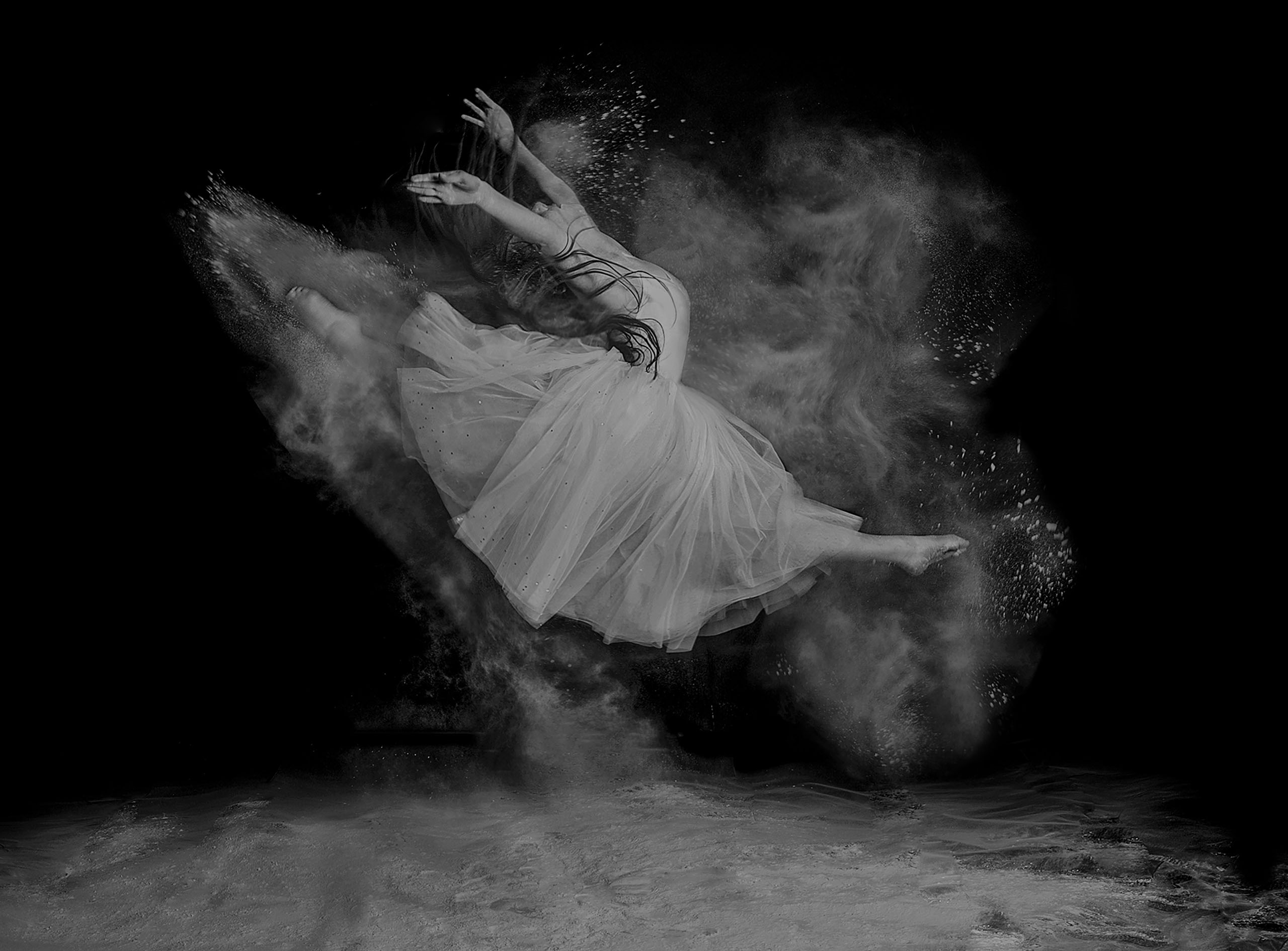
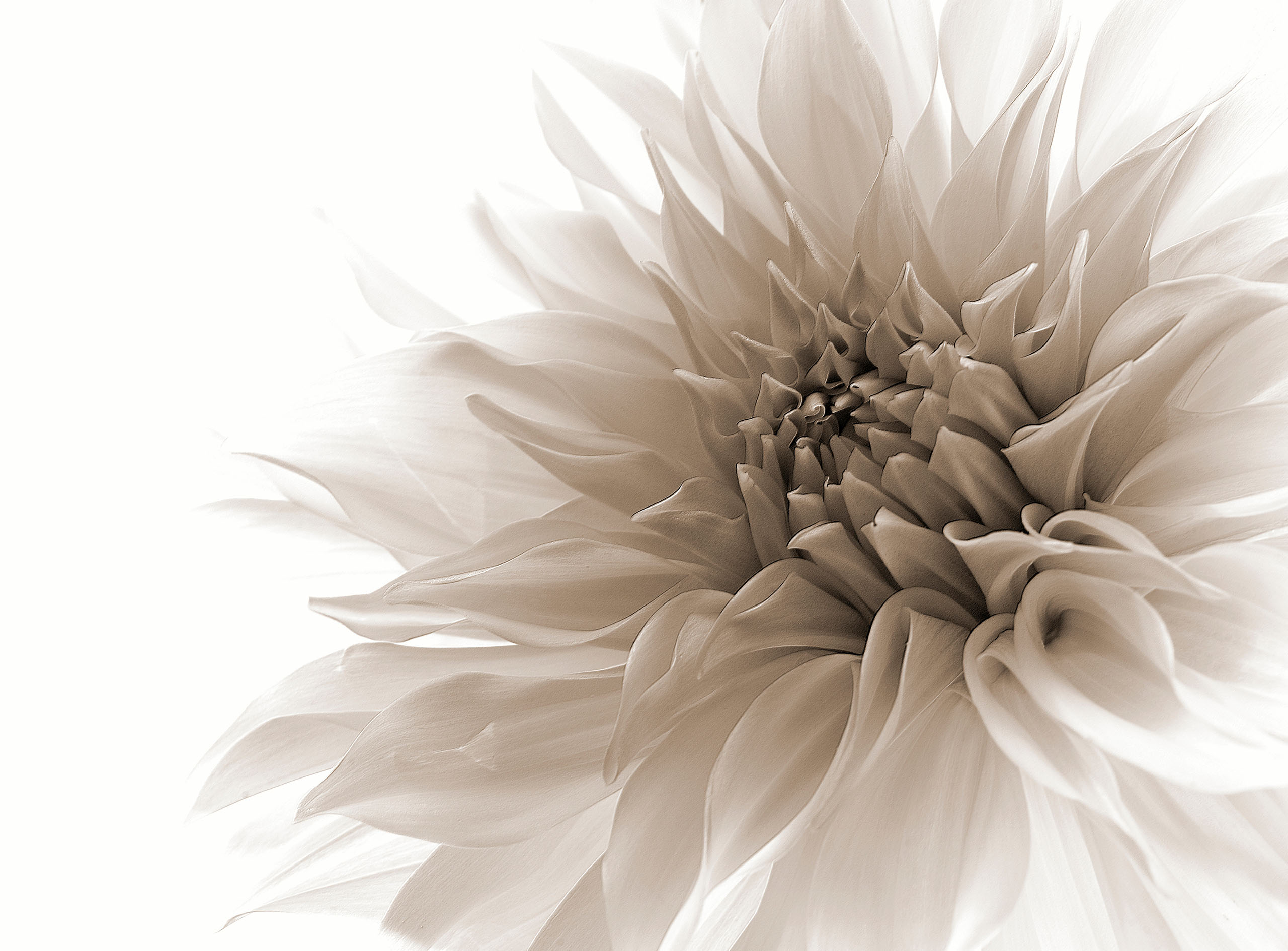
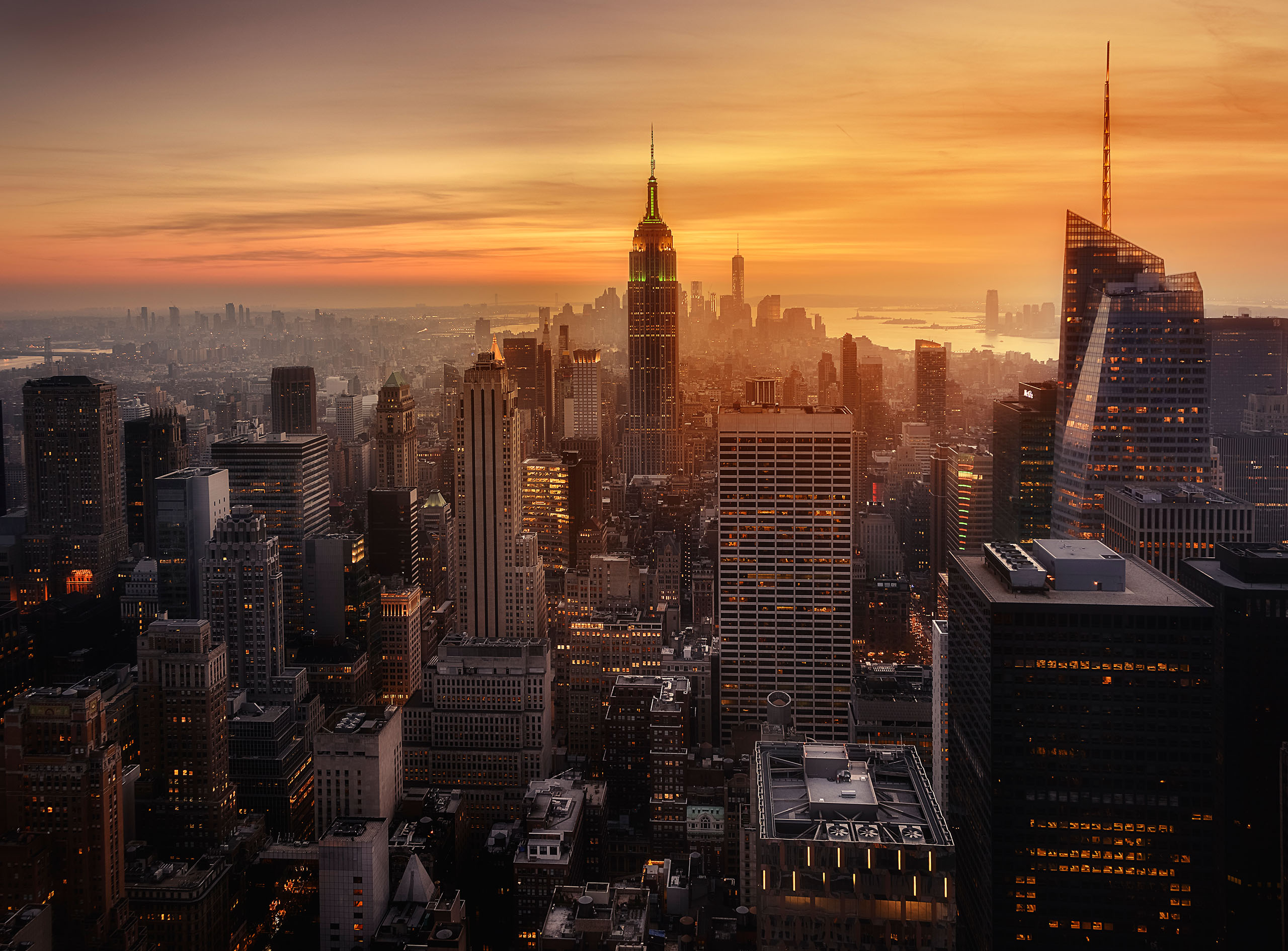
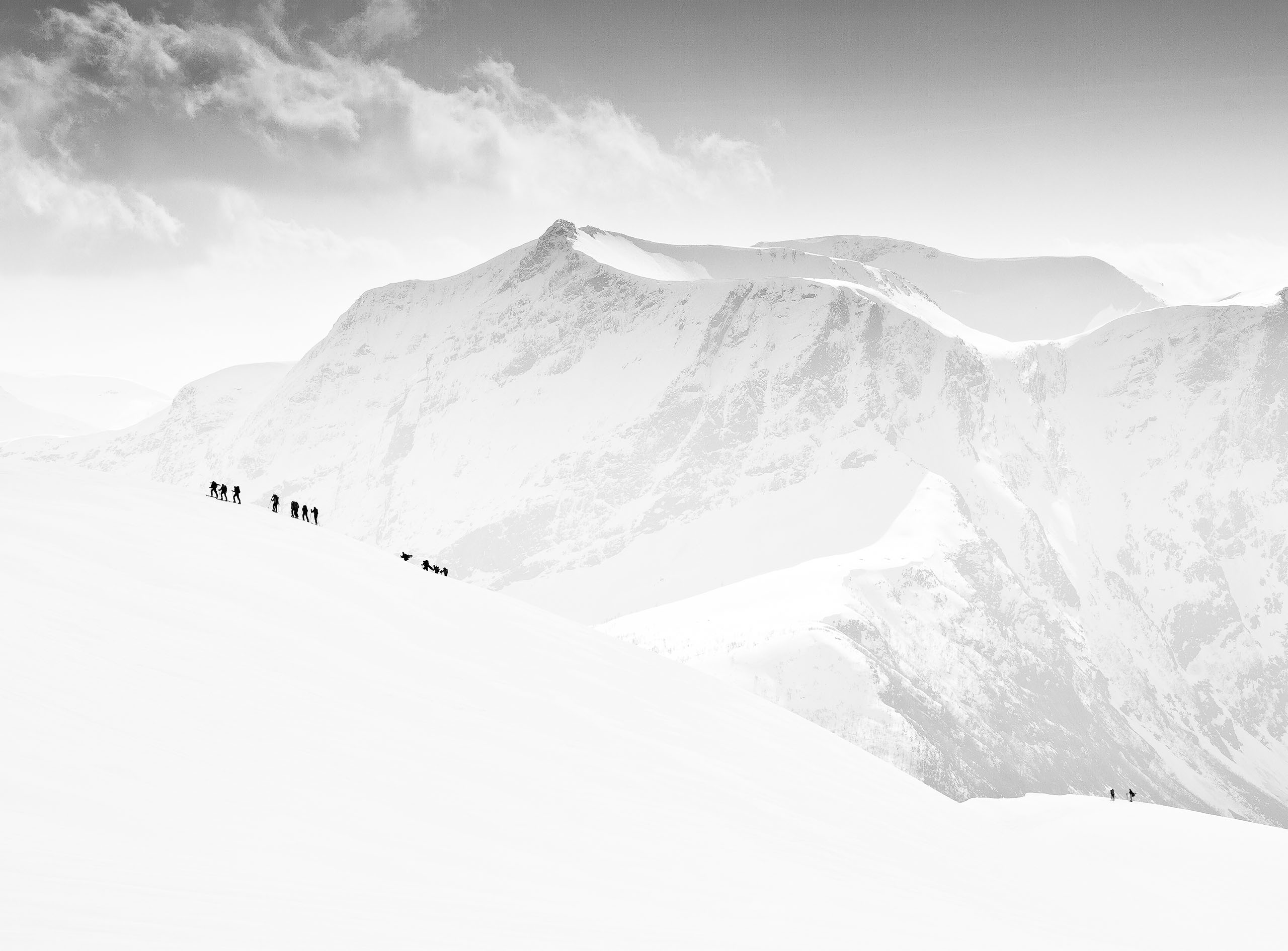
landscapes/documentary/street/... and creative edit
Posted 2 years ago
Hello there!
I just wanted to raise a question to be answered on a philosophical level: landscape/documentary/street/portrait shots and the like, represent still what they are if you add: textures, fake birds (sorry but they are quite a cliché here), and you alter objects in shape and you change proportions here and there? Is that really a 'capture', an 'exposure', a 'photograph' or should be rather considered a "more creative" work?

In digital art philosophy the assumption is clear: you're starting from a photo to obtain something different by a substantial manipulation: multiple exposures combined together, photomotanges, drawings, textures, heavy PS work, and so on. Something close to what a painter does. But if you classify a digital-art work as landscape/documentary/street/portrait, you're fundamentally "cheating" the philosophy behind those fields of photography, that are considered to be a genuine and possibly clever/original/artistic capture of reality - the product of an eye/mind and a single exposure.

My point is - despite the "it's the result that counts" motto, which many people like - that categories are important on a philosophical level. I mean, if you want you can add birds and all that you think is necessary to obtain what you want, but then you've got to have the intellectual honesty to admit that. Someone does it someone else not, and it's not nice.

Hope not to sound retrograde, but I think there is a huge difference behind the two approaches, and since they are both present here on 1x (and that is among the things I like, to accomunate art in all forms) category should reflect this difference.

What do you think about it?

F.
 
Posted 2 years ago
Fabio,
I think that you raise an important question about what is a photograph and what is not. Photomontage, "Creative edit", etc have their place in art and there is a section here for that also. But I have also seen more than one photograph in other sections that is really a merge of several images and that is, IMO, not correct. I was also surprised when I presented an image for critique, it was a landscape with a rain storm approaching, and one member recommended that I should add one or several persons!

I also remember a discussion about buying expensive lenses where someone said it was stupid as they could fix most lens flaws later in PP. I do not think that is true, but if that is done then I think one also is very close to the borderline!

I may also be conservative when it comes to PP and I would welcome a discussion on this subject and when a "photograph" is no longer a photograph!

Stig
 
Posted 2 years ago
Stig Hammarsten wrote
I was also surprised when I presented an image for critique, it was a landscape with a rain storm approaching, and one member recommended that I should add one or several persons!

...he was right, maybe you should add also Zeus throwing some lightings here and there from up the clouds, that would increase impact and mood! ;)

Stig Hammarsten wrote
I would welcome a discussion on this subject and when a "photograph" is no longer a photograph!

kind of subjective matter but, at least, I think that many people agree on the fact that an image is no longer a photograph if you alter shapes or do photomontages. If you add a person where there was none, like that member suggested, then yours would no longer be a photograph but a photomontage...

Anyway discussing whether an image is or is not a photograph was partially my intention here, I'd rather wanted to say that since there are two very different approaches in obtaining an image (I'm not saying one is better than the other - just that they have a very different philosophy) and that sometimes they can even lead to a similar result, then it should be a nice thing to categorize as 'creative edit' all those images obtained by combining two or more photograph into one or changing the shapes and colors of a photograph like you were painting or something..

 
Posted 2 years ago
Quote: " it should be a nice thing to categorize as 'creative edit' all those images obtained by combining two or more photograph into one or changing the shapes and colors of a photograph like you were painting or something.."

I definitely agree.
 
Posted 2 years ago
Fabio,

I'm glad to see you broach this topic because I definitely agree that there is a difference between straight photography and digital graphic art (digital painting perhaps). I have voted to publish many images that were clearly heavily manipulated because they were good images. But some should have been in the "creative edit" category rather than landscape, portrait, architecture, etc. It seems that most of the landscapes here have more of a painting like feel to them than the crisp photographic images by Adams and Eliot Porter for example, that I favor. However, some of that impression may be due to the nature of digital imaging, variations in monitors and even the browser or photo program we use to view the image. I don't know for sure. But clearly, digital photography produces much different images than film photography.

In my darkroom days I would often dodge and burn to enhance (or save) an image. Digital processing is an evolution of those darkroom techniques that can produce incredibly beautiful images in talented hands. And that is fine. But I too have wondered when an image stops being a photograph and becomes instead a digital painting.

I don't have the knowledge to use editing software for much beyond cropping and making slight adjustments in levels, contrast, etc. Doing anything with layers and filters is pretty much beyond me. I'd rather go re-shoot an image than try to fix it in editing. Since my primary focus is landscape, my subjects aren't too mobile! Still, there are many landscapes that I can't go back to for months, years, or ever because my travel won't permit it. Hence the value of bracketing, even though Ansel Adams called it a crutch.

Maybe someday I'll become adept at editing and will begin to wonder if I'm producing photos or digital paintings. But that day is a long way off.

Until then I'll be watching this thread with interest.

Thanks,

Carl

 
Posted 2 years ago
Interesting question.
I dont't think it is important to try to find a definition on what still is a photograph and what isn't but it would be nice if information on the processing of an image was added to a picture.

I guess each has his or her personal do's and don'ts in this issue. Personally I find it rather strange if some one suggest to flip a landscape or street image or to add or subtract elements to a picture. It is something I do in abstract images and edits but not in anything that has to represent a real world, or suggests representing the real world. To me that feels unnatural to do. What I mostly do in editing is working the (overall) contrast, lightness, sharpening, and B&W conversions. I'm quite conservative in selective edits on parts of the image.
On the other hand 'retouche' in portrait photography - I guess - is as old as photography itself....

 
Posted 2 years ago
i think if people add birds, textures and so on it would be better for them to start painting, so they are even less limited by doing their art.
 
gerard sexton  Senior Critic
Posted 2 years ago
Whatever label you put upon it photography & the creative art of photographic manipulation is a means of artistic expression. For some like me who either through limited draughting or drawing skills or through some mental block that is preventing them from exploring painting or drawing photography is the alternative to painting. For me it is the instant gratification of being able to show you what is in my minds eye & hey I have tried painting realistically but always end up making abstracts that are more a result of frustration or impatience at my lack of resolve to stay the course than anything I originally started out to do.

Should people who take this creative option to modify alter & manipulate their images be forced to share their creative template? I don't think so since its almost a moral call. If others choose not to give out their secrets their pathway to their final images thats fine with me it is for them to decide/choose not for us to prescribe. The suspicions & paranoia that some viewers have about such & such an image is their concern not the concern of the artist. We all have a choice as viewers & as artists to indulge in mind games about this subject & then it is ultimately the responsibility of the individual within the confines of his/her core beliefs to make their own judgments about how to be or how to see. What you see is what you get isn't that enough? And given that the web offers opportunity to engage in dialogue with the artist we all can if we so chose ask the questions that may or may not be in our minds about certain aspects or devices that may or may not have been employed.

Even in art I think it misguided to impose your moral code on others. If they think its OK to present in public work that has been manipulated beyond a certain (notional as after all what is right & what is wrong there are no laws) boundary then that is for them to decide. We all know the story of the Spanish wild wolf & there are many others. So isn't it all about consequences? What is the consequence of not revealing the truth about how you arrived at a final image? In competition with others for prizes their are rules if you break these rules & are discovered cheating then (depending on the degree of visibility & size of the competition) the consequences could be monumental (and I need not elaborate we can all imagine them real or illusory). But in selling or posting an image on a website which has been manipulated beyond this imaginary boundary what are the consequences? Very few as far as I can see especially if in general it sells or people like it regardless of how it was arrived at.

But I don't want to pontificate that I am any better or worse than others in this regard it serves no purpose. What I do know is that I take full responsibility for what I do & that as always (and yes sometimes to my detriment) I believe I am not responsible for what others think. If I think it relevant to you the viewing public I will share with you what I have done if not I will leave you to make your own mind up. And by the way I have fallen foul of the mistrust that is out there on a number of occasions where in the past others have suggested I have used manipulation to achieve something where in fact the opposite was the case.

For me the idea of imposing your will on or regulating what others should or shouldn't do in art is abhorrent better we leave it up to the individuals to be open & honest & if they chose not to or you disbelieve them & that impacts your viewing experience so be it!

 
Posted 2 years ago
i think the final result is what is important. actually it does not matter if a photo is a capture, a composition of many photos, a drawing or whatever. but there is a common definition of photography.

btw, i still deeply believe street and documentary photography is not art at all! its just a way of documenting the world. i really dont want to become an artist!
 
Posted 2 years ago
There are lots of things said on the topic. I recently stumbled upon this interview which is interesting
http://blakeandrews.blogspot.com/2010/03/q-with-pelle-cass.html
 
Posted 2 years ago
i don't think that the point here is the discussion between what is photography, art, or graphic design, or photo manipulation. The point here is honesty or not honesty. if people add elements to the original photo, they should label it as "creative edit", why don't they? The reasons is simple... not long ago i submited a photo that i labeled as "creative edit" because i added a little motion blur to make the "pan effect" that i got at the moment that i took the pic and bit more soft... result... didn't even reach the members vote, i wonder how it would be if I didn't state it as creative edit and didn't described what i did in the comments field if the result would be the same?
It is my true belief that many photos around should be classified as "creative edit" and if people did a little description of what they added, probably, a great result would loose all its impact because it is manipulated. So... i guess each one of us are guided by the inself moral and honesty.

Forgive my english.. hope you understand.

 
Posted 2 years ago
An interesing article

I suppose it sort of boils down to the question 'what is photograpy':
- a form of art in which only the aesthetics of the result achieved are important?
- a type documenting our times in a neutral registration (if that is possible at all)?
- a means for political or social change?
- a 'technical' game that needs to be played according to certain rules?
et cetera

The parallel with mountaineering springs to mind. Is it far play to use sherpa's and oxigen to climb "everest" ....

I don't think one is better than the other.
And I also don't think there is anything like 'objective' photography, there is always a choice in aiming, framing and shooting...
A single shot picture with hardly any post-processing is not necessarily more or objective or truthfull as a composite one...

Interesting stuff to reflect on ...
 
Posted 2 years ago
... me too think photography is hardly documentary, in the strict sense. I mean it is not truthful. By the way Walker Evans who was not the most inexperienced guy on the matter nor an idiot would often insist on that, saying documentary was a very big word, too big for photography. And he was followed by people like Friedlander and Winogrand in the idea that camera lies. So I see it as a point of view rather than sheer documentary (and whatever the genre). And that is what to me makes the medium unique and interesting, involving an ambiguous relationship with "reality" (what's this ?), which is probably what makes it an artistic medium (at least potentially). To me what did people like HCB, Robert Frank or Winogrand is not very documentary, it is more interpretation (on a personal level, be it aesthetic, psychological or social). For this very reason the debate about manipulation is difficult, I don't have any definite opinion on that. And when it is closed to be very documentary it is never far from being propaganda (*) which by the way does not necessarily mean it is non-artistic.

Does it have to be aesthetic - or better said "pretty" ? I don't think so, I would rather say no. Being pretty for the sake of being pretty is a non-artistic process to me. A photo can reach beauty without being pretty nor tasteful, and this is more what I see as an artistic achievement.

(*) even for a "good cause", such as the FSA project in the 30's, and by the way some of its most iconic photo were manipulated...
 
Posted 2 years ago
photography is never objective, its the personal view of the photographer. still it shows some small piece of reality.
for me every photograph is a form of communication, doesnt matter if staged or not, edited or not. if somebody travels into a conflict zone he chooses small fragments of what he wants to show. photos are a piece of reality combined with the soul of the photographer.
 
Rui Pires  Curator
Posted 2 years ago
I think people who manipulate photos and publish it under "documentary", "nature" or "photo-journalism" must be arrested, and pitty there are no international laws about that.

All this generes one day will be part of history, in cientific books, enciclopedias, school books, etc, as he have now images form 40´s, 50´s etc. It´s easy for me to believe that images of that middle XX century is true, is possible to manipulate in darkroom but not a generalizated way in that times. Today we have PS.

Can you imageine in next 50 years ower childrens look to history book in school room and say "ahh, teacher, this is from PS era, probably fake"

All the rest, for me is completely right, everybody is free of doing his artwork in their way, manipulated or not. Art is free, maybe the last thing free in most part of world.
 
Posted 2 years ago
jacques philippe wrote
To me what did people like HCB, Robert Frank or Winogrand is not very documentary, it is more interpretation

Well it is documentary in the sense that it documents their interpretation of 'reality'
I suppose that documentary in the more technical sense of 'documenting' something, can be a rather boring thing to look at if you're not working on the subject that is documented...: Forensic pictures, technical representation of archeological sites, surveyors pictures, old fragile documents on microfilm ... Pictures of numberplates taken to check if the road taxes have been paid... Documenting the shape and patterns on the dorsal fins of sharks or whales in fieldwork...

In photography I think it is more important to be aware of our subjectivity (in making pictures and interpreting them) and to discuss that openly, instead of trying to find out when a picture should no longer be regarded as a picture.... or a truthfull representation of 'reality'
But thats just me....

Cheers

 
Rui Pires  Curator
Posted 2 years ago
By the way, about landscape, if a landscape photo was to be use in a cientific magazine, like NGS or others, or in a enciclopedia or cientific book, no manipulation at all.

If it´s for your wall, or art magazine or art exibition, landscape can looks like Mars or Saturn landscape, no problem at all for me :)))
 
Posted 2 years ago
Rui Pires wrote
Can you imageine in next 50 years ower childrens look to history book in school room

Hi Rui

A schoolclass in 50 years....

"Sir, 'A book what is that....'" :-)

Rui Pires wrote
By the way, about landscape, if a landscape photo was to be use in a cientific magazine, like NGS or others, or in a enciclopedia or cientific book, no manipulation at all.

But in- or excluding the waste dump in the picture is also a choise or manipulation .. on a different level, but still.

Not showing the smoking factory in a picture in a holiday brochure, but including some beautifull people in the image that never are there up when you get to the hotel....... Or a couple of birds in the sky.

cheers....
 
Posted 2 years ago
Rui Pires wrote
I think people who manipulate photos and publish it under "documentary", "nature" or "photo-journalism" must be arrested, and pitty there are no international laws about that.

Rui, the most famous PJs do thta, even not consiously.

Let's take two example of very famous photos that have falled under the PJ label (one was published in NG, the other in NY Times)

First one is the "Afghan Girl" from Steve McCurry. Why do you think it became so famous. Because of the eyes I believe. But what sort of truth about Afghanistan those "eyes" are about ? Very few indeed, it does not tell anything to us. It is just an impact thing that triggers further interpretation, association of ideas that can be as wrong as true, in fact it just found a reflection into our mind and then makes its way. For that purpose the pic is a masterpiece, but poor documentary.

Second one is even more complex. Let's talk about "The vulture and the child" from Kevin Carter. A terrible photo, that was also very controversial. Put the sentiment apart and try to figure out what is going on here and what the pic is about. Is it about vultures attacking children in Africa and something to be done to prevent that ? Of course not. The image is indeed more symbolic than anything else. You do that on a studio and it becomes conceptual. The photographer used a juxtaposition to tell a story here, it does not document anything in the strict sense, but instead it just "tells" about a problem which is remote from the picture (war, famine). Another thing is that the pic gives the impression that the child is alone and will be attacked. But this is not true since there is another person here, the photographer! So even if you look at the "story", the fact basically described in the pic it is a lie.
 
Posted 2 years ago
i dont think the carter photo (he actually commited suicide some month after documenting the scene) is about a bird attacking a child. for me the photo shows a big contrast between the strong and big bird and the absolutely helpless and weak child. so even if the photo does tell a story (and to be honest this story is made by the viewer not by the photo itself) it is a document of the moment. most people think it is the most disturbing and strongest photo they have ever seen, even if there is no blood, no cut off legs like we always see in the news. i totaly do not agree with the statement that the story described by the photo is a lie.
 
Posted 2 years ago
Remo Rufer wrote
i dont think the carter photo (he actually commited suicide some month after documenting the scene) is about a bird attacking a child. for me the photo shows a big contrast between the strong and big bird and the absolutely helpless and weak child. so even if the photo does tell a story (and to be honest this story is made by the viewer not by the photo itself) it is a document of the moment. most people think it is the most disturbing and strongest photo they have ever seen, even if there is no blood, no cut off legs like we always see in the news. i totaly do not agree with the statement that the story described by the photo is a lie.
Remo, maybe I do not express myself correctly but what you say is exactly what I meant (the photo tells another story than a bird attacking a child etc..) when I say it is a lie I do not mean it is manipulated from technical point of view, but because it tells something which is not what it is described. If you prefer I can say it is allegoric.
 
Posted 2 years ago

Remo Rufer wrote
and to be honest this story is made by the viewer not by the photo itself

Remo, if you know well the context of this photo you must know what Carter said about it. He did not just snap and go. He was there, waiting a long moment to capture the vulture in the most possible threatening position. He was expecting the vulture to open his wings to make a "better" shot but that did not happen. So finally he took that shot and go. So it is not documenting the moment as you said. He was consciously waiting for something to make the photograph better, with more impact, clearly on a symbolic level. So I think you are wrong when you say that it is not the photographer who makes the story but the viewer. He did.

I am not saying that to blame Carter (first he is is dead, and second who am I to blame him ?), but just to figure out the context of the photo (and again, it was Carter himself who explained that, which I find is very courageous).

 
Posted 2 years ago
so the conclusion is that not only the photographer can change the meaning of a photo also the viewer gives an own meaning to a photo. but that doesnt make a photo a lie, its just an interpretation.

photojournalist lies look like this:

those photos lie because the photographer changed the scene:
http://www.slublog.com/archives/2006/08/the_passion_of.html

this photo is just a bad technical fake:
http://littlegreenfootballs.com/weblog/?entry=21956_Reuters_Doctoring_Photos_from_Beirut&only

when we look at a dead palestinian child we automatically think about israels soldier that killed it. but the child could have died from a car accident too. that is why i think in pj its important to have a text and photos. the text is brainfood and the photos are there to share emotions and communicate with our heart.
if we show photos in the wrong context it can change the meaning of it, but still it is not a lie.
 
Rui Pires  Curator
Posted 2 years ago
If i was there in that moment, i shoot that Carter idiot and the bird, and not with the camera grrr :(((

My friends, you know what i mean with manipulation. Maccurry photo of Afghan girl for my is more art than documentary, is a superb portrait. And in portraiture, not much "documentary" information, but art, fellings, all that. Other authors do "encenated" photography not manipulated, for me that is also not tolerable in documentary.

I have some troubles to take my documentary shoots in order models be there and "i´m not there". Not easy at all in little villages. So, long time with my camera arround waiting for a moment where people forget i was there. Then ... click ! But i like very much also taking portraits, a close portrait is not ideal "documentary" photo, you only see the model and not background and natural environment of the model.

 
Posted 2 years ago
Gerad's long post from @5 hours about says it all for me...
 
Posted 2 years ago
Remo Rufer wrote
but that doesnt make a photo a lie, its just an interpretation.
Yes. But again I think one can say the camera lies. The example of the dead palestinian child you give is a good one for this. I don't mean "lie" in a malicious way. It is just that framing, capturing things with missing elements of context makes the final outcome not truthful. If not truthful it is a basically a lie.
Remo Rufer wrote
that is why i think in pj its important to have a text and photos
Indeed, but the text can be an interpretation as well. or the guy who write misinformed. This happens everyday.
 
Posted 2 years ago

thats true, a text, a movie, a photo, everything is an interpretation. even if we go to a conflict zone we would be biased if we see things in nature.

rui, its a portrait, but still a documentation.
 
Rui Pires  Curator
Posted 2 years ago
Remo Rufer wrote
rui, its a portrait, but still a documentation.

Less documentation, more intrepretation, allways a portrait :)

You know what thinks PSA and FIAP about portraiture in travel or documentary photography, that Maccurry´s Afghan Girl can´t fit in his "rules", because no environment that identifys the place, etc. Can be a docuemntary photo with some text that explain something about the girl, but that is subjectif, as been said before. I love that portrait, not as documentary, but as art of portraiture, ever manipulated or not. Is a strong one, like many others we can see here in 1X.
 
Posted 2 years ago
Rui Pires wrote
Less documentation, more intrepretation, allways a portrait :)
... I realize we reached post 27 without even mentioning goats. Are we getting too serious ? :))
 
Posted 2 years ago
Seems a lot of the discussion is turning around the idea of "purity" (aka reality, objectivity). But a curious thing is that a photograph can never be faked, no matter how faked the photograph. There is nothing, not the best computer graphics, that could successfully pass as a real photograph. In that way, a photograph is undetachable from its own nature. It is by its nature a pure thing, real and objective. That is only the case though if it is 100% a photograph. A hybrid object, eg a mixture of photograph and computer graphics, would not qualify. We are consequently obliged to define a photograph as an object produced from a one-off sampling of light, or multiple samplings of the same light source, only. You open the shutter, the camera collects light data, you use that data to produce - a photograph! It's an absolutely unique thing. No matter that the source of the light data might be faked. It also doesn't matter what the photographer does with the quantum of light data that has been collected, so long as that data is the only data being used. The light data has not been faked by being manipulated. A photograph is consequently pure, real and objective in a way that graphic and plastic arts can never be. Pigment and marble and computer generated pixels are not the thing that they represent, they are intermediaries in the process of representation. By contrast a photograph is genuinely what it represents - a unique sample of light. A photographer is constrained by the light data captured, not in the common way that any material constrains by its nature the use made of it, but beyond that in that the light data is already representation. The "truth" of the light data can never be obscured, no matter how much it is manipulated, because the truth of what the light data represents is intrinsic to the data. In photography truth and representation come together inextricably.

Throughout art history, I think it is true to say, there have been separate roles for symbolic and explanatory representation. Most museum art is symbolic, representing something removed from everyday experience, myth, legend, imagination, propaganda, the ideal, etc, while explanatory art is in the realm of science, representing pragmatic experience.

At times the two converge, as in portrait painting, and also, notably, in the Impressionism style. It is remarkable both that photography arose at the same time as Impressionism, and modern science, and that one of the chief and earliest uses of photography has been in portraiture. And photography is born of science, and the science of photography is far and away the dominant preoccupation of its practice.

Today, non-documentary forms of representation strive to be ultra realistic, eg computer games, while current trends in photography are towards an artificial style. But this is a style only, it affects not one jot the unique truth of photography that I talked about above.

There is plenty of evidence that people will always embellish, elaborate and exaggerate. These characteristics of the human mind saturate both art and science, think of surrealism and string theory. Photography cannot be immune. But here, photography is like science, in that the freedom of representation is a delusion which evaporates in the face of facts, in the case of photography the fact of the representation in the form of light the photographer has saved, as I described above.

The *subject* of a photograph is a different matter entirely. It has no intrinsic truthfulness, just as extraneous additions of data to what was received through the lens as described above is fake. So, there needs to be a distinction made between the natural truthfulness of the photograph, as I have described, and the "truthfulness" of the subject, either the subject in front of the lens, or the fake subject injected into the original data captured.

brosepix

http://www.brosepix.com

 
gerard sexton  Senior Critic
Posted 2 years ago
Well Brose touche excellent piece! & the two threads overlap yes!

 
JBA 
Posted 2 years ago
Good post Brose. I think the viewer is the thing that gets manipulated, not the photo. . .
Jon
 
Posted 2 years ago
brose wrote
The "truth" of the light data can never be obscured, no matter how much it is manipulated, because the truth of what the light data represents is intrinsic to the data.

Hi Brose
I'm tempted to disagree wit you on that one.
Technically you are right of course nothing can represent the photons better than projecting them straight onto a medium be it film or a sensor... I'm not going into the details here of the selection of the range of wavelengths you intend to capture... that can result in quite a lot of different representations of that what is being caught on the light sensitive medium.
But photography (outside the scientific domain perhaps) is more than a representation of photons.. it is used as a means of communication of meaning / emotions / beauty ... And that meaning gets enriched in the way a picture is framed by the photographer or artist and by the one who is looking at the picture.

What is your view on the selection of focal length (and the compression of depth is causes) and / or the selection of depth of field to emphasize or blurr specific elements in the image... Even with the same crop the images caught on the medium can be quite different, and so the meaning can vary too.

I find it hard to draw a line that states that manipulation in front of the camera (before capturing the light on the medium) per definition results in something truthfull (not being manipulated light) and that manipulation in postprocessing per definition results in something untruthfull (manipulated light)...

Cheers
 
Posted 2 years ago
Willem de Vlaming wrote
brose wrote (click for original post):
The "truth" of the light data can never be obscured, no matter how much it is manipulated, because the truth of what the light data represents is intrinsic to the data.

Little postscript that spring to mind

If I understand you correctly the "the truth of the original" or "reality" is irrelevant (the no matter how much it is manipulated bit) the only thing relevant in photography is the 'first capture' of the light on film or the sensor in the camera, with only limited freedom in the processing to turn that information into a visible image...

Just trying to understand your line of thought here....

I would not call that truth though, more a practical definition

Cheers again

 
Posted 2 years ago
Willem de Vlaming wrote
brose wrote (click for original post):
The "truth" of the light data can never be obscured, no matter how much it is manipulated, because the truth of what the light data represents is intrinsic to the data.

Little postscript that spring to mind

If I understand you correctly the "the truth of the original" or "reality" is irrelevant (the no matter how much it is manipulated bit) the only thing relevant in photography is the 'first capture' of the light on film or the sensor in the camera, with only limited freedom in the processing to turn that information into a visible image...

Just trying to understand your line of thought here....

I would not call that truth though, more a practical definition

Cheers again


Yes, Willem. And thanks for the discussion. To try to follow my own line of thought ;) ... with a perhaps-useful analogy... when you take a photo it is like being dealt a hand at cards, the truth is the cards and their values, which are one and the same, and no matter how you rearrange those cards, turn them this way or that, how you can play those cards (and you do have some choice) is restricted absolutely by what they are (even what you can do in places like PS cannot escape from the imperatives inherent in the data you captured).

And yes, the subject can be faked, and/or determined, manipulated etc by such things as the technology you use for the eventual sampling, as you describe, and afterwards, in post processing, by adding extraneous data, which then becomes part of the subject after the sampling. That corroborates the distinction I made: in both cases any "impurity, subjectivity, artificiality" is in the subject, not the photograph. The photographer has freedom with the subject but no real freedom with the data. You can ask for a redeal of the cards, but you *must* play the hand you eventually get, and your play is determined by those cards alone.

In short, any problem of authenticity is in the *subject* presented by the photographer, not in the *photographic* image. I think this understanding helps solve the issue that Robert H raised in the related thread. If you do nothing to falsify the subject (and that's different from choosing the subject), and only use the data of the capture, you have got purity.

Photography is not like perception, though it is somewhat like seeing. In perception other parts of the brain can contribute to the data captured by seeing, resulting in illusions and hallucinations, which are false. Both seeing and perception are largely unconscious and subconscious, while photography is entirely conscious and purposeful. We cannot consciously produce perceptual illusion and hallucination, but we can consciously create a *subject* of a photograph, and in any way we like. That is the route by way of which we can hack the truth of photography.

brosepix

http://www.brosepix.com

 
Posted 2 years ago
brose wrote
the truth is the cards and their values, which are one and the same

The value of one and the same card can vary quite a lot depending on the game your playing ....
brose wrote
In short, any problem of authenticity is in the *subject* presented by the photographer, not in the *photographic* image.

Hmmm... I find the concept of authenticity lying in the photographic image .... (the way the atoms an molecules are arranged on the photographic paper) quite hard to grasp.....
You can isolate and identify that as a more or less fixed phase in the process of making and presenting pictures.
But stating that
brose wrote
"impurity, subjectivity, artificiality" is in the subject, not the photograph

comes close to stating that you can't blame the paper for the message that is written on it. Nor can you blame the ink for the way it is dispersed on the page.

I'll keep grinding this one....

Cheers :-)

 
Posted 2 years ago
Willem de Vlaming wrote
comes close to stating that you can't blame the paper for the message that is written on it. Nor can you blame the ink for the way it is dispersed on the page.

In the case above, the ink and the paper are intermediary and instrumental in representing a reality which they do not partake in. In the case of light in a photographic image it is both a representation and the thing it represents. Isn't there a fundamental difference?

If I photograph a sign, isn't there a difference between reading the sign in the photograph and looking at the photograph?

brosepix

http://www.brosepix.com
 
Posted 2 years ago
brose wrote
Yes, Willem. And thanks for the discussion. To try to follow my own line of thought ;) ... with a perhaps-useful analogy... when you take a photo it is like being dealt a hand at cards, the truth is the cards and their values, which are one and the same, and no matter how you rearrange those cards, turn them this way or that, how you can play those cards (and you do have some choice) is restricted absolutely by what they are (even what you can do in places like PS cannot escape from the imperatives inherent in the data you captured).

Dribbling this naive reasoning in 2 threads today huh?? As I said in the other thread you know absolutely about playing poker! Seem like you just like to type...
brose wrote
The photographer has freedom with the subject but no real freedom with the data. You can ask for a redeal of the cards, but you *must* play the hand you eventually get, and your play is determined by those cards alone.

To repeat myself, you know nothing about playing cards and you are beginning to sound like you know very little if anything about processing images in computers... The freedom with data comes either in the darkroom or in the computer by choices made daily by the photographers. Such choices as what developer to use, were to dodge, where to clone, where to saturate, where to desaturate. There are even software programs that will totally re-sort all the data in a file and make something totally new from it.
 
Posted 2 years ago
Clyde Beamer wrote
The freedom with data comes either in the darkroom or in the computer by choices made daily by the photographers. Such choices as what developer to use, were to dodge, where to clone, where to saturate, where to desaturate. There are even software programs that will totally re-sort all the data in a file and make something totally new from it.

These things are done on the data, whether pixels or substances on film, and it is the data you have that fundamentally determines what can be done, not the tools you use on it.

brosepix

http://www.brosepix.com
 
Posted 2 years ago
brose wrote
in representing a reality which they do not partake in

I'm afraid there is no (relevant) reality without representation.
The reality that lies beyond the horizon of representation (or interpretation) is unknown end even quite irrelevant.
Photography or photo-art as I see it is one way of representing reality and interpreting it. That's what makes it fun.
 
Posted 2 years ago
Willem de Vlaming wrote
brose wrote
in representing a reality which they do not partake in

I'm afraid there is no (relevant) reality without representation.
The reality that lies beyond the horizon of representation (or interpretation) is unknown end even quite irrelevant.
Photography or photo-art as I see it is one way of representing reality and interpreting it. That's what makes it fun.

Not sure where this fits, Willem. There is a difference between something which is used to represent something else, and something which represents itself, and that is illustrated by my example of the photograph of the sign. On the one hand the photograph represents the sign and its meaning, and that is determined by the photographer. On the other hand the photograph is what happens when the photographer opens the shutter, it is the representation of light represented by itself, and once in existence it determines what can be done with it.

brosepix

http://www.brosepix.com
 
Posted 2 years ago
brose wrote
Clyde Beamer wrote
The freedom with data comes either in the darkroom or in the computer by choices made daily by the photographers. Such choices as what developer to use, were to dodge, where to clone, where to saturate, where to desaturate. There are even software programs that will totally re-sort all the data in a file and make something totally new from it.

These things are done on the data, whether pixels or substances on film, and it is the data you have that fundamentally determines what can be done, not the tools you use on it.

brosepix

http://www.brosepix.com

Once again, teaching the truly naive is frustrating. Do you know what a program like Maya can do?? If not read, there are lot's of forums out there. Google photo realistic rendering.
 
Posted 2 years ago
Clyde Beamer wrote
Do you know what a program like Maya can do??

Once again, Clyde, how much can Maya do without data? How can you play poker without cards?

brosepix

http://www.brosepix.com
 
Posted 2 years ago
brose wrote
Clyde Beamer wrote
Do you know what a program like Maya can do??

Once again, Clyde, how much can Maya do without data? How can you play poker without cards?

brosepix

http://www.brosepix.com

Brose you really do try to read what I write. I told you twice that it's not about playing without cards. You were saying that once the cards were dealt your hand was sealed. All I'm trying to tell you is that the "data" on the cards can in many cases be irrelevant, not even know or revealed to anyone else at the table. I once even played a hand and won a big pot without even looking at my own cards.

Maya can create a completely photo realistic looking image with no data at all to start. Just use Google once in a while...
 
Posted 2 years ago
Clyde Beamer wrote
Brose you really do try to read what I write. I told you twice that it's not about playing without cards. You were saying that once the cards were dealt your hand was sealed. All I'm trying to tell you is that the "data" on the cards can in many cases be irrelevant, not even know or revealed to anyone else at the table. I once even played a hand and won a big pot without even looking at my own cards.

Extraordinary. Perhaps I will come visit you after all (but without any money!!).

Clyde Beamer wrote
Maya can create a completely photo realistic looking image with no data at all to start. Just use Google once in a while...

But then we are no longer talking about photography, I think. And as I said, nothing else but a photograph can pass as a photograph.

brose
 
Posted 2 years ago
brose wrote
I once even played a hand and won a big pot without even looking at my own cards.

And concerning this, in my analogy of cards I was not restricting the value of the cards to their face value, but I said any value the cards might have in a particular move in a particular game, including their *strategic* value. Poker cannot be played without cards, full stop. Something else might be, but not poker, or it's no longer poker. Like Maya is not photography. You've cut the branch you're swinging on.

brose
 
Posted 2 years ago
Remo Rufer wrote
i think if people add birds, textures and so on it would be better for them to start painting, so they are even less limited by doing their art.

...and I think that painters would do better by looking at the world rather than painting from photographs, so they are even less limited by doing their art.

Two of my photographs were recently converted into paintings by LeRoy Neimann (just for reference: http://www.kingdouglas.com/MikeWilson/LeRoyNeiman.htm ).

I prefer my photos...no offense intended, LeRoy.
 
Posted 2 years ago
King Douglas wrote
...and I think that painters would do better by looking at the world rather than painting from photographs

I think Ben Shahn did both, or more specifically would do paintings based on his OWN photographs, which is a rather unusual routine (?)
 
Posted 2 years ago
jacques philippe wrote
King Douglas wrote
...and I think that painters would do better by looking at the world rather than painting from photographs

I think Ben Shahn did both, or more specifically would do paintings based on his OWN photographs, which is a rather unusual routine (?)

I was being ironic. I don't care if photographers paint or if painters paint from photographs. It's all art.

And then there is David Hockney.
 
Posted 2 years ago
King Douglas wrote
jacques philippe wrote
King Douglas wrote
...and I think that painters would do better by looking at the world rather than painting from photographs

I think Ben Shahn did both, or more specifically would do paintings based on his OWN photographs, which is a rather unusual routine (?)


I was being ironic. I don't care if photographers paint or if painters paint from photographs. It's all art.

And then there is David Hockney.


I've seen in 1978 in Vienna a big exhibition with 300 drawings by David Hockney all made after photos made by himself!Great works!
 
Posted 2 years ago
Just found a quote that i find interesting in this discussion about "taking pictures" and "making images"...

It is a piece of text from John Szarkowski written in 1966 (The photographers eye) way before digital camera's and photoshop, but still an interesting morsel
Just want to share some quotes from that book

"The invention of photography provided a radically new picture-making process - a process based not on synthesis but on selection. The difference was a basic one. Paintings were made - constructed from a storehouse of traditional schemes and skills and attitudes - but photographs, as the man on the street put it, were taken."
...
The first thing that the photographer learned was that photography dealt with the actual; (...). He learned that the world itself is an artist of incomparable inventiveness, and that to recognize its best works and moments, to anticipate them, to clarify them and make them permanent, requires intelligence both acute and supple. But he learned also that the factuality of his pictures, no matter how convincing and unarguable, was a different thing than the reality itself. Much of the reality was filtered out in the static little black and white image, and some of it was exhibited with an unnatural clarity, an exaggerated importance. The subject and the picture were not the same thing, although they would afterwards seem so. It was the photographer?s problem to see not simply the reality before him but the still invisible picture, and to make his choices in terms of the latter. (...)
Since the photographer?s picture was not conceived but selected, his subject was never truly discrete, never wholly self-contained. The edges of his film demarcated what he thought most important, but the subject he had shot was something else; it had extended in four directions. If the photographer?s frame surrounded two figures, isolating them from the crowd in which they stood, it created a relationship between those two figures that had not existed before.
The central act of photography, the act of choosing and eliminating, forces a concentration on the picture edge ? the line that separates in from out - and on the shapes that are created by it. (...)
There is in fact no such thing as an instantaneous photograph. All photographs are time exposures, of shorter or longer duration, and each describes a discrete parcel of time. This time is always the present. Uniquely in the history of pictures, a photograph describes only that period of time in which it was made...
... Cartier-Bresson defined his commitment to this new beauty with the phrase "The decisive moment", but the phrase has been misunderstood; the thing that happens at the decisive moment is not a dramatic climax but a visual one. The result is not a story but a picture."

So taking photographs 'focusses' on identifying the right moment, selecting, framing and capturing a discrete parcel of time.
Which still doesn't give much foothold on the subject of postprocessing. Other that that mixing different "discrete parcels of time" into one image transcends the phase of "taking photographs" .....

Just wanted to share this bit of old knowledge - that was new to me...

Cheers

 
Posted 2 years ago
Thanks for sharing Willem, and all I can say is Amen to this.
 
Posted 2 years ago
Thank you for dropping his name Jacques.... a very interesting track you've opened up for me...
 
Posted 2 years ago
Willem de Vlaming wrote
"(...) Cartier-Bresson defined his commitment to this new beauty with the phrase "The decisive moment", but the phrase has been misunderstood; the thing that happens at the decisive moment is not a dramatic climax but a visual one. The result is not a story but a picture."

I have to add that I was very pleased to read that because it is more or less what I tried to say in this post from my blog:
http://jophilippe.wordpress.com/2010/02/13/about-the-decisive-moment/
 
JBA 
Posted 2 years ago
Yes, Szarkowski is The Man!
 
Posted 2 years ago
Thanks to you both, Jacques and Willem.

I found this extract interesting for the idea that the photographer creates the subject, rather than produces a photograph-object. It is close to this idea of mine which I wrote in an earlier post here:

>The *subject* of a photograph is a different matter entirely. It has no intrinsic truthfulness, just as extraneous additions of data to what was received through the >lens as described above is fake. So, there needs to be a distinction made between the natural truthfulness of the photograph, as I have described, and the >"truthfulness" of the subject, either the subject in front of the lens, or the fake subject injected into the original data captured.

The subject is what the photographer has total control over, and so they can make it be true or false, as they like. The processing of the photograph (which excludes the injection of extraneous data) is a matter of the laws of optics and electronics, fundamentally immune from falsification by the photographer, and so irrelevant to judging the documentary authenticity of a photograph.

The subject that the photographer fashions *out* of the photograph is where we look for the meaning of the photograph, and it is that subject-meaning that has or has not documentary authenticity.

brose
 
gerard sexton  Senior Critic
Posted 2 years ago
Brose I cannot subscribe to your statement that the photographer is in control of the subject since in many cases this cannot be further from the truth. Granted in regards to inanimate objects say still life & product shots that has a ring of truth but in candid street nature & landscape photography the photographer is far from in "control" of his subject rather the other way around. Anything which is influenced by human nature animal nature the weather or other factors normally outside our control leaves the photographer in the "lap of the gods" & the only thing the photographer can realistically control is his own actions responses & reactions in any given situation. Even if the photographer is proactive & acts as if to preempt a "good "photo he still is not in control as you suggest.

The photographer can of course improve his/her chances of a capture by being more knowledgeable about a) his equipment b) the process of capture c) his subject. The creative process is a synthesis of all these factors culminating in PP & then printing but commencing prior to hitting the shutter. Its about selection of lens ISO aperture exposure selection white balance contrast colour where to stand from what height what time of day and and and and so on and so forth and its about how each individual sees & interprets about each individuals cerebral process of visualising.

On reading the extract of Szarkowski I instantly related to what he was writing. In a nutshell we make our own luck & yes this is part of the creative process. You cannot see it if you aren't there! you can only imagine it. But if you imagine it might happen its then about responding to that idea & going out & making it happen so that we can "take" the picture. Though clearly this making should not be confused with control. The variables have all been mentioned choice of aperture etc these are like the brush strokes on the canvas Monets La Grenouillere versus Renoirs La Grenouillere.

So its an amorphous process influenced by so many variables & so much external noise factors that are totally outside of our control though the more we know the more we understand the more we can maximise our chances of that capture.


Posted 2 years ago
brose wrote
The subject is what the photographer has total control over,


That's is what is called wishful thinking, or.....
 
Posted 2 years ago
brose wrote
So, there needs to be a distinction made between the natural truthfulness of the photograph

Hi Brose,

I'm afraid there is no such thing as the natural truthfulness of a photograph... It's always a selection made by the photographer and the outcome is always influences by the technical limitations and hick-ups of the laws of physics in the processing needed to make that capture visible again.

Taking photographs is a highly subjective capture of 'a discrete parcel of time' . In which the photographer has to deal with 'reality' as he finds it. Transferring that reality into a two dimensional capture on a sensor or film translates and distorts reality in various ways. And the same is true for making that captured distorted data visible again on photographic paper or a monitor. The fact that these processes 'obey the laws of nature' don't make them more or less truthful than the images put together by a photographic artist working in photo-shop. He and his tools are subject to the same laws of nature at the photographer taking an image on location. They play a different game.

The distinction between 'taking' photographs and 'making' creative edits has little to do with truthfulness, laws of nature et cetera.
The first one working from a single shot, capturing 'one discrete parcel of time'
The other making an image by mixing several, 'discrete parcels of time'

Another issue is the various way's of post processing a 'taken picture' . Post-processing consists of various ways of applied distortion of the already subjective and distorted capture of that single "discrete parcel of time". The relevant question isn't if one type of distortion is more truthful than the other but which one works best for a specific goal, use or effect.

Cheers and Happy Easter!! :-)

 
Posted 2 years ago
Thanks Gerard, Lars and Willem for the lively responses!

I wonder if I can satisfy some of your objections quickly.

First about "control". I describe a process which begins with all the material available to a photographer, let's call it the data field, to the limited sample of that which the photographer puts in the camera, including the addition to and/or subtraction from the data field by the photographer before and/or while taking the shot, let's call that the subject field, to the way in which that is done, to the treatment of the subject field in post, to the creation by the photographer of the meaning of the subject field. There is a transition from no control whatsoever of the data field as found, as you correctly point out, through limited control over the subject field before during and after the shot, to ultimately complete control over the meaning the photographer gives to the subject field, which is the whole point and goal of the process - the significance of Szarkowski's "in terms of the latter".

Second about documentary authenticity or "truthfulness". As I have described, and as John Szarkowski too recognises, a photograph has a reality which is independent of the photographer in a way that, for example, a painting does not, the difference between taking and making. That reality is not affected by the taking, but its meaning for us is made by the photographer. So, "The subject and the picture were not the same thing, although they would afterwards seem so. It was the photographer's problem to see not simply the reality before him but the still invisible picture, and to make his choices in terms of the latter.", the "invisible picture" being the subject-meaning which the photographer *makes* ("his choices") out of the reality which has been *taken*.

Szarkowski is basically describing the unique nature of the raw material the photographer works with, the "actual", and the unique relationship between the two, defined by all of contemporaneity (up to a point), potential of control expressed by the words "take" and "make", and the characteristics of the vehicle which carries the final product, which is the meaning. This is very much like the process that I have been describing. I see no essential difference or conflict.

Thanks for your wishes, Willem! To you too!

brose
 
gerard sexton  Senior Critic
Posted 2 years ago
Willem

the problem here is I think the distinction between the "truth" of the event & the "truth" of the photograph "truth" meaning reality; as you know truth has a multitude of meanings. Take HCB image of the woman with the umbrella leaping above the puddle. The truth is the woman is there she is mid air with an umbrella & there is a puddle (and as I write this I can foresee those of you queuing up to dispute even this). After that it gets hazy & in fact we are into the "unknown" after all we don't even know for sure he actually hit the shutter we have to accept that as a given fact not a truth simply because we are the viewer not the practitioner. Everything after is conjecture & educated (or un..) guess work. It is then that we place upon that image our own truths which are in fact not truths but beliefs or judgments whether or not we are talking about any distortion in the reality of the stage being set or the technical process adopted to achieve the printed outcome & therefore we only question this reality because we have experiences & prejudices that lead us to this conclusion. Same with & even more with a painting especially going back to the Renaissance painters how do we know for a fact that Michelangelo or Leonardo actually painted any one of the paintings attributed to them? How do we know Bernini chiselled all of the marble on his statues of David? Or more recently how do we know Tracy Emin made her bed or Damian Hirst screwed the bolts & glued all the sides of his Cow in Formaldahyde?

Does the practitioner then unwittingly tell lies? I don't I take it as I see it; a man blows a bubble in Trafalgar Square a man feeds a pigeon in St James Park. After that I am an accessory to the fact. I conspire to alter the reality by cropping altering from colour to b&W increasing decreasing the perception of shadow & light & may but not in either of the two examples clone out elements of an image to aid composition. This is notwithstanding what happens to the data after I hit the shutter & is processed in the camera.

Ouch my head is hurting.... and does it matter since if as the technical experts are right we have no control how the data is processed on to a card or a piece of light sensitive film then what can we do but be slaves to that process or move to something where in fact we do have control like a paint brush? I accept that to many it seems yes it does matter to me well I struggle like most to get out of my reactive mind & into my responsive mind. I would prefer to reside all the time in the latter but know this is nirvana. I'll fight that fight as & when as the truth is I care!

And what I know is that my truth is like the time on my watch it is always right & sometimes wrong!
 
Posted 2 years ago
gerard sexton wrote
Ouch my head is hurting.... And what I know is that my truth is like the time on my watch it is always right & sometimes wrong!

Hmm I guess that's true :-)))
On a philosophical level one might even wonder how one can be sure the world exists when one is sleeping....

I guess it's time for some fresh air :-))

 
Posted 2 years ago
brose wrote
As I have described, and as John Szarkowski too recognizes, a photograph has a reality which is independent of the photographer in a way that, for example, a painting does not

I think I've sort of lost you a bit

What I remember was that argued that what has been caught on the sensor with a camera was a more actual / real / truthful representation of reality than anything that has been tinkered with after that initial capture. I think that particular idea is wishful thinking.

But like I wrote in response to Gerard... I guess it's time for some fresh air...

G'day and take care..... :-)
 
Posted 2 years ago
Willem de Vlaming wrote
I think I've sort of lost you a bit

There's a surprise...
 
Posted 2 years ago
Not reading, but just looking at this thread, I wondered - where did that thing come from that they say all the time, "Women talk way too much!". WOMEN talk way too much?

HA! :)
 
Posted 2 years ago
Ursula I Abresch wrote
Not reading, but just looking at this thread, I wondered - where did that thing come from that they say all the time, "Women talk way too much!". WOMEN talk way too much?
HA! :)

Hi Ursula
It's a pity you haven't read it all.... :-(

Because you would have found out that everything men say and write make sense...

I'm going to hide behind a sturdy tree now.... ;-)))

Happy Easter...

 
Posted 2 years ago
Willem de Vlaming wrote
brose wrote
As I have described, and as John Szarkowski too recognizes, a photograph has a reality which is independent of the photographer in a way that, for example, a painting does not

What I remember was that argued that what has been caught on the sensor with a camera was a more actual / real / truthful representation of reality than anything that has been tinkered with after that initial capture.


Yes, sort of, but not quite. I had drawn out one way in which a photograph is always authentic, an additional second way in which it is authentic, and one way in which it is both authentic and inauthentic. None of them necessarily involves post processing, the original issue in this thread, and it was the premise that authenticity was necessarily destroyed by post processing that I have been arguing is wrong.

The physical attributes of a photo, the attributes which finally constitute the actual image, in other words the sample of data taken from the data field of my earlier post, by the camera, is always authentic, in that it can be reverse engineered back to the original sample of data - remember that a photo is a unique form in that it is what it represents. Light creates the photograph, light data is the photograph, whereas light does not create a painting, for example, a painting is a representation of light in paint. The paint of a painting is not the stuff of what it represents, but the light of a photograph is the actual data that existed in the data field at the time the photograph was taken. Thus its inalienable authenticity, or truth.

If a photographer gives a meaning to the photo which is the same meaning that that sample from the data field had in the context of the data field from which it was taken, then the meaning of the photo is authentic, just, as I described above, as the photo itself as.

If on the other hand the photographer gives the photo a different meaning, in terms of this different meaning it is inauthentic, while still remaining authentic, as I described in the first paragraph.

brose


Posted 2 years ago
Ursula I Abresch wrote
Not reading, but just looking at this thread, I wondered - where did that thing come from that they say all the time, "Women talk way too much!". WOMEN talk way too much?
HA! :)

; )
 
Posted 2 years ago
Willem de Vlaming wrote
Ursula I Abresch wrote
Not reading, but just looking at this thread, I wondered - where did that thing come from that they say all the time, "Women talk way too much!". WOMEN talk way too much?
HA! :)

Hi Ursula
It's a pity you haven't read it all.... :-(

Because you would have found out that everything men say and write make sense...

I'm going to hide behind a sturdy tree now.... ;-)))

Happy Easter...


Riiiiight! Keep hiding :)
 
Posted 2 years ago
Willem de Vlaming wrote
Ursula I Abresch wrote
Not reading, but just looking at this thread, I wondered - where did that thing come from that they say all the time, "Women talk way too much!". WOMEN talk way too much?
HA! :)

Hi Ursula
It's a pity you haven't read it all.... :-(

Because you would have found out that everything men say and write make sense...

I'm going to hide behind a sturdy tree now.... ;-)))

Happy Easter...


Remember, Willem, now that PS CS5 is aware, there is no place to hide!

brose
 
Posted 2 years ago
brose wrote
Remember, Willem, now that PS CS5 is aware, there is no place to hide!
brose

PS CS5 is aware of what?
 
Posted 2 years ago
Your content, what you ate for lunch and stuff like that!
 
Posted 2 years ago
Ewwwwweeee! Gross.
 
Posted 2 years ago
Ursula I Abresch wrote
brose wrote
Remember, Willem, now that PS CS5 is aware, there is no place to hide!
brose

PS CS5 is aware of what?

Me hiding behind a tree...

Hi Ursula

I must say I had to google for the meaning of "PS CS5" :-)))

Brose is referring to the discussion in the forum on "content aware delete" in the new photoshop update...
http://1x.com/v2/#discussions/20228/content-aware-fill-sneak-peek/

Willem
 
Posted 2 years ago
Oh, alright. Thank you, Willem. Obviously I haven't been paying much attention to some of these threads. :)
 
Posted 2 years ago
Ursula I Abresch wrote
Oh, alright. Thank you, Willem. Obviously I haven't been paying much attention to some of these threads. :)

You don't know what you're missing.... :-)))
 
Posted 2 years ago
Willem de Vlaming wrote
Ursula I Abresch wrote
Oh, alright. Thank you, Willem. Obviously I haven't been paying much attention to some of these threads. :)

You don't know what you're missing.... :-)))

Hehe, I don't know that I want to know what I'm missing! :)
 
Phyllis Clarke  Senior critic
Posted 2 years ago
Ursula I Abresch wrote

Hehe, I don't know that I want to know what I'm missing! :)

Smart!
:)
Phyllis
 
gerard sexton  Senior Critic
Posted 2 years ago
I know what I know & don't know what I don't know but I know what I want to know so you know I am going out to find out what I don't know!
 
Phyllis Clarke  Senior critic
Posted 2 years ago
gerard sexton wrote
so you know I am going out to find out what I don't know!

Maybe you will meet Donald Rumsfield on the Road and you can chat about the knowns and unknowns and the almost knowns, the never to be knowns, and the knowns you do not know you know. It will be an interesting meeting. :) Have a few pints and report back to us..:) All laughter is welcome.
Phyllis
 
gerard sexton  Senior Critic
Posted 2 years ago
I think I would first ask him about the Generals Revolt since few thought he was a competent strategist hence his call for resignation in 2006.

Happy Easter Phyllis! good to keep a sense of humour! Have a nice weekend!
 
 
Compose a reply
You must sign in if you want to post a reply.
Fine Art Prints  -  Our books  -  Work with us  -  FAQ  -  About 1X
© 1X Innovations AB 2007-2011. All rights reserved.
 
 Stumble 1X